Translate

Search This Blog

Showing posts with label Gulf. Show all posts

Sunday, June 28, 2026

The Word "Ceasefire" Has Become a Fashion Now! Have We Forgotten the Real Meaning?

The word 'ceasefire' has lost its meaning. As of June 28, 2026, the US-Iran 2026 peace deal crumbles while attacks on Bahrain and Kuwait escalate. What does this mean for Gulf investors?

A deep dive into the crumbling peace deal, escalating tensions, and what it means for the Gulf region

When Did "Ceasefire" Start Meaning "Temporary Pause"

Remember when a ceasefire actually meant peace? Those days feel like a distant memory now.

As of June 28, 2026, the word "ceasefire" has essentially become a punchline in Middle Eastern geopolitics. We hear it, we sign it, we celebrate it and then, within weeks or even days, we're back to the sound of explosions. The 2026 peace agreement between the United States and Iran was supposed to change everything. It was hailed as a historic breakthrough, a diplomatic masterpiece that would finally bring stability to one of the world's most volatile regions. Fast forward to today, and that much-touted deal is looking more like a piece of toilet paper than a binding international agreement.

So what went wrong? Actually, let me rephrase that what is going wrong? Because the truth is, the writing has been on the wall since day one.

Thursday, June 25, 2026

Behind Diplomatic Smiles: Deep Frustration Grips UAE Over US Actions in Iran War

Just over a year ago, the United Arab Emirates was riding high on a wave of optimism. Donald Trump's second term brought promises of massive investment deals $2 trillion worth, by some accounts and the relationship between Abu Dhabi and Washington seemed stronger than ever. The Emirati leadership positioned itself as America's closest Gulf partner, a strategic ally in a region often described as the world's most volatile neighborhood.

Today? That optimism has curdled into something much darker.

Behind the carefully choreographed handshakes and public displays of diplomatic solidarity at the G7 summit in France, where UAE President Mohamed bin Zayed al-Nahyan offered his formal thanks to Trump, there's a growing sense of betrayal rippling through the Emirati establishment. Business leaders, former officials, and ordinary residents are asking the same uncomfortable question: How could our closest ally drag us into a war we explicitly warned them not to fight?

Thursday, June 11, 2026

Trump is Getting Played Like a Chump by Iran — Even the Wall Street Journal is Embarrassed

Analyzing how America's Iran policy has become a masterclass in diplomatic surrender

The Wall Street Journal just exposed Trump's Iran policy as a complete failure. Here's what's really happening in the Gulf and why America looks weaker than ever.

Remember when Donald Trump promised to get tough on Iran? He swaggered into office talking about the "maximum pressure" campaign, flexing about deals, and promising to stop Iran once and for all. Fast forward to June 2026, and what do we have? A president who's essentially handing Tehran a blank check to destabilize the Middle East while twiddling his thumbs and calling everything "no big deal."

The conservative Wall Street Journal not exactly a bunch of bleeding-heart liberals just ripped Trump's Iran policy to shreds. And honestly, they didn't pull any punches. Their assessment? Nine weeks into the latest crisis, Iran has been calling the shots, and Trump's been doing exactly what they want him to do.

Sunday, June 7, 2026

Viral Videos From Central Tehran Spark Heated Debate Over Armed Resistance in Iran

Videos from central Tehran showing calls for armed resistance have gone viral, sparking intense debate about the future of political opposition in Iran and the role of foreign powers.

A startling scene unfolded on the streets of Iran's capital recently, sending waves across social media platforms and sparking intense discussions about the future of political resistance in the country. Videos circulating online captured a man driving through central Tehran near the iconic Milad Tower while prominently displaying a sign that called for the Iranian people to take up arms against the current regime. The footage quickly went viral, dividing opinion both within Iran and among observers around the world.

The incident has ignited a fierce debate about the nature of resistance, the role of foreign powers in Iran's internal affairs, and what path forward if any exists for those seeking political change. As the videos continue to spread, analysts, activists, and ordinary citizens are grappling with what this moment might mean for a nation that has long navigated the complex currents of domestic opposition and international scrutiny.

Saturday, June 6, 2026

A Dangerous Game: U.S. and Iran Test the Limits of Their Ceasefire

The ceasefire was supposed to change everything. When the United States and Iran announced their agreement back in April 2026, there was a collective sigh of relief across the Middle East and beyond. Finally, it seemed like the long-standing tensions between Washington and Tehran might be easing. But here we are, just a few months later, watching the same old patterns play out once again.

Earlier this week, the U.S. military carried out strikes on Iranian radar sites in the Gulf. The reason? Iranian drones operating too close to the Strait of Hormuz. U.S. officials were quick to call the action defensive a necessary step to protect regional maritime traffic after what they described as an immediate threat. But let's be honest here: when one side launches strikes and the other responds with accusations, it feels less like peace and more like a temporary pause.

Sunday, May 31, 2026

When Arrogance Meets Reality: How the 2026 Iran Standoff Exposed America's Strategic Blind Spots

The conversation around U.S.-Iran relations has shifted dramatically and not in the way Washington expected.

If you've been watching the news unfold over these past few months, you probably sensed something was off. The boasts from the White House podium got quieter. The "we're this close to a deal" headlines keep repeating. And somehow, despite all the tough talk and economic threats, Iran still isn't blinking.

Here's the uncomfortable truth nobody in official Washington wants to say out loud: The 2026 strategy hasn't delivered not even close. The regime in Tehran is still standing. Its nuclear program? Still humming along. Those missile and drone capabilities everyone's worried about? Completely intact. Maybe even more dangerous than before.


And that was supposed to be the whole point, wasn't it?

Thursday, May 28, 2026

Trump's Threat to Destroy Oman: A Self-Inflicted Wound to American Credibility in the Gulf

Trump's recent threat to destroy US ally Oman has sent shockwaves through Gulf diplomacy. Analysis of why this unprecedented statement damages decades of American credibility in the region, especially given Oman's unique role as the trusted mediator between Washington and Tehran. What this means for future US-Gulf relations.

When a U.S. president threatens to "blow up" an ally, even the most seasoned diplomatic hands in Washington struggle to find the words. Yet that's exactly what happened on May 27, 2026, when President Trump made comments that left longtime Middle East observers genuinely stunned. The target wasn't a rival or an adversary it was Oman, a tiny sultanate that has spent decades quietly keeping lines of communication open between Washington and Tehran, often when no one else could.

If you were trying to deliberately destroy American credibility in the Gulf region, you'd be hard-pressed to find a more effective sentence than "we'll have to blow them up." It's the kind of comment that doesn't just echo across headlines it lingers in the collective memory of regional leaders for years, sometimes decades. And given Oman's unique position as the one country both the United States and Iran have trusted as a backchannel for generations, this may well rank as one of the most self-defeating moments in recent American diplomatic history.

Thursday, May 7, 2026

Saudi Arabia Just Blocked Trump's Big Military Plan And Things Are Getting Ugly

Saudi Arabia refused U.S. access to bases for Project Freedom, forcing Trump to suspend the Hormuz operation. Explore the diplomatic fallout and what it means for Gulf security.


There's a old saying in diplomacy: "Close friends make the toughest enemies." Right now, the relationship between the United States and Saudi Arabia is testing that theory in a pretty dramatic way.


The Kingdom essentially told Washington to take a hike when it came to "Project Freedom" President Trump's high-profile mission to secure the Strait of Hormuz. And here's the thing: they didn't just say no. They slammed the door so hard that the whole operation had to be put on pause.


Let me walk you through what happened, why it matters, and what it says about the shifting power dynamics in one of the world's most volatile regions.


What Exactly Was Project Freedom?


Before we get into the drama, let's talk about what Project Freedom actually was. The Strait of Hormuz is one of the world's most critical chokepoints roughly 20% of all oil traded worldwide passes through those waters. When tensions between the U.S. and Iran started heating up, the Trump administration wanted to establish a visible military presence there to deter any Iranian funny business.

Saturday, April 25, 2026

The Security Trap: Why the Gulf’s Big Gamble on Peace is Backfiring

The Gulf monarchies traded political capital for U.S. security and normalization with Israel. Now, they face missiles, drones, and economic instability. Discover the brutal truth behind the Middle East's failing security deals.


For decades, the math seemed simple for the Gulf monarchies. If you want to keep your skyscrapers gleaming and your oil flowing, you make a deal with the biggest power on the block. You host the U.S. bases. You sign the normalization deals. You trade political capital for a "security umbrella" that promises to keep the neighborhood bullies at bay.


But right now, looking at the smoke on the horizon, that math isn't adding up.


The ongoing tension between Iran and its rivals has exposed a brutal truth that nobody in the plush offices of Riyadh, Abu Dhabi, or Doha wanted to face: The very things they did to buy security are now making them targets. They didn't start this war, but they are the ones currently paying the highest price.

Saturday, April 11, 2026

The Great Pivot: Why the Gulf is Flirting with China (And It’s Not Just About Oil)

As global politics shift, a new strategic partnership is forming in the Middle East. Discover why Gulf monarchs are looking east to Beijing for stability, and what it means for the world order in 2026.

If you feel like the world’s geopolitical map is being redrawn in real-time, you’re not alone. Lately, the sands of the Middle East are shifting, and the wind is blowing from the East. A new chapter is being written between the wealthy Gulf monarchies and a rising China, and the catalyst for this change isn't just economic—it's profoundly personal.

For decades, the United States was the undisputed security guarantor for nations like Saudi Arabia and the UAE. That partnership, built on oil and arms, seemed unshakeable. But in 2026, the calculus has changed. The world is watching a new, more erratic America, one that often feels like it's being orchestrated for an audience of one.

Thursday, April 9, 2026

Trump’s “Shootin’ Starts” Warning: A Deterrent or a Ticking Time Bomb?

President Trump's stark warning to Iran post-ceasefire has the world on edge. We break down the "shootin' starts" threat: strong deterrence or a dangerous gamble that could spiral into wider conflict?

Just a single post, sharp, and loaded like a live round in a chamber.

Let’s be honest, the past few days have felt like a geopolitical blur. After the intense, nail-biting scramble to secure a ceasefire between the U.S. and Iran, the world took a collective breath. For about five minutes.

Then, in classic Trump fashion, the other shoe dropped.

In a statement that’s now ricocheting across every news channel and government office from Washington to Beijing, President Donald Trump declared that U.S. forces will remain camped in and around Iran until what he calls a “real agreement” is fully complied with. The kicker? His unmistakable warning: if it isn’t, the “shootin’ starts” again, and this time, it’ll be “bigger, better and stronger than ever.”

Yeah, you read that right. It’s the kind of rhetoric that makes diplomats sweat and ordinary folks like us wonder what on earth happens next.

Tuesday, April 7, 2026

Gulf On Edge: Mapping Iran's Missile and Drone Attacks Across the Gulf and Israel | The Real-World Fallout

Iran's missiles are hitting more than just military targets. We break down the attacks across the Gulf, the surprising country hit hardest, and what it means for global stability.

Let's talk about the situation in the Middle East. If you've been glancing at the headlines over the past month or so, you've seen a worrying pattern emerge: a steady drumbeat of missile and drone attacks from Iran.

The official line from Tehran is that they're targeting US assets in the region, a response to the ongoing tensions. But when you look at the smoke clearing, the picture is far more complex and alarming. The reality on the ground is that these strikes are hitting civilian areas, critical energy infrastructure, and the everyday spaces where people live and work.

It’s a dangerous escalation that’s sending ripples across the globe, from oil markets to your gas pump. So, let's unpack exactly where these attacks are happening, who's being hit the hardest, and what the real damage looks like.

Friday, May 31, 2024

Houthis Claim Missile Attack on US Aircraft Carrier Eisenhower in Red Sea

In a significant escalation of hostilities in the Red Sea region, Yemen's Houthi rebels have announced that they launched a missile attack on the US aircraft carrier USS Dwight D. Eisenhower. This action is in retaliation to recent airstrikes conducted by the US and British military in the Yemeni provinces of Sanaa, Hodeidah, and Taiz. The Houthi military spokesperson Yahya Saree made the announcement, stating that the operation was a direct response to the coalition's recent operations in Yemen.

Saturday, December 18, 2021

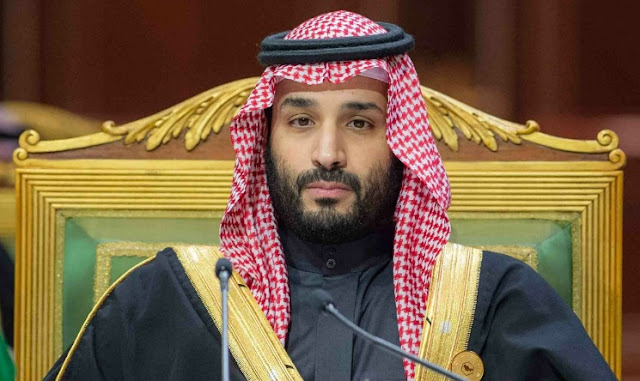
'Uncrowned King': Extensive Powers Of Saudi Crown Prince Muhammad Bin Salman

Due to the illness of King Salman bin Abdulaziz of Saudi Arabia, Crown Prince Muhammad bin Salman has taken full control of the kingdom even before he officially took over the throne.

According to the AFP news agency, 86-year-old Farman Rawa is seriously ill these days and due to his health concerns, Muhammad bin Salman, 36, has taken over all the affairs of the government.

These days, Salman bin Abdulaziz is rarely seen in public circles, and Muhammad bin Salman has been chairing meetings at the royal palace since welcoming foreign delegations.

Tuesday, August 4, 2020

Stay Away From Libya or Face Our Bullets


Libya's eastern army general has warned Turkish President Recep Tayyip Erdogan to stay his forces out of Libya or face an armed response

According to an Arab report, the warning was issued by General Khalifa Haftar of the Libyan Eastern Army, who led the Lebanese National Army (LNA) during a dispute with the govt of National Accord (GNA) in Tripoli.

It should be noted that Recep Tayyip Erdogan has sent Turkish-backed people from Syria to fight for the GNA, who have artillery and heavy weapons, and that they have changed course.

Addressing the military on the occasion of Eid al-Adha, Haftar accused the Turkish president of "coming to Libya in search of the legacy of his ancestors."

Sunday, June 16, 2019

The second oil strike in a very month within the gulf ignites the alarm of a military conflict


The attack on 2 oil tankers within the Gulf of Asian country, still associate degree orphan, has left one amongst the boats adrift these days, eaten up by the flames and with a dense column of smoke rising from its badly broken skeleton. The sabotage, the second in a very month in a very key space for the world transport of oil, has boosted oil costs and has increased  the concern of a military conflict between the us , its allies within the gulf and Islamic Republic of Iran , when weeks tensile.

Late this Th, U.S.A. Secretary of State electro-acoustic transducer Pompeo has blessed Islamic Republic of Iran for the "flagrant assault". "This conclusion relies on the intelligence, the weapons used, the amount of expertise necessary to execute the operation, the recent Iranian attacks against different ships, and also the indisputable fact that there's no 'proxy' cluster in operation within the space that has the resources and also the capability to act with such a degree of sophistication, "he aforesaid at a group discussion.

"US service within the region received 2 distress calls at 0612 AM standard time and a second at 7:00 AM," aforesaid Joshua Frey, voice for the U.S.A. Navy's Fifth Fleet. From its base in Bahrain , the contingent monitors the strategic Strait of Hormuz, the road through that transits four-hundredth of the entire oil transported by ocean on the earth.

The two vessels reached ar the MT Front double star, with the flag of the Marshall Islands and Norwegian property, and also the Kokuka spirited, of Panama and Japanese owner. not like the sabotage that occurred on could twelve , within which the damages caused to the framework of the four oil tankers littered with marine mines were restricted, the half on this occasion was additional serious.

The images broadcast by Iranian state tv hours when suffering 3 explosions showed the fireplace spreading on the quilt of Front double star. Its crew - created from twenty three folks, as well as eleven Russians, one Georgian and eleven Filipinos - has been reclaimed and brought to the Iranian port of Jask. Its owner, the Norwegian company Frontline, has denied that the ship had been shipwrecked, discarding previous info disseminated by the Iranian state news organisation IRNA. The Front double star transported seventy five,000 plenty of resolvent, a liquid compound of hydrocarbons derived from the processing of oil, that had been loaded within the Emirati port of Ruwais and were heading to Taiwan .

The second victim of the attack, the Kokuka spirited, had left the Saudi port of Al Jubail within the direction of Singapore with twenty seven,000 plenty of fuel. Its crew, composed of twenty one staff of Philippine position, has left the ship when suffering a second attack 3 hours when the primary explosion. it's been reclaimed by a close-by ship. "The fuel load is unbroken," aforesaid the owner of the tanker, Bernhard Shulte.

The boat has been broken on the starboard aspect and one in every of the employees on board has been treated for minor injuries. per national capital, each crews are reclaimed by the Iranian Navy, associate degree info tagged "false" by Washington, that claims to possess reclaimed twenty one sailors from one in every of the 2 vessels, that Islamic Republic of Iran antecedently claimed it had saved. The U.S.A. has captive to the world the USS Bainbridge, a destroyer with guided  missiles, to help the 2 vessels.

So far nobody has claimed responsibility for attacks that occurred at the gates of the Strait of Hormuz, perceived to follow the pattern of sabotage of 4 oil tankers registered last month off the coast of the emirate of Fujairah. A previous attack that also comes queries, among them its authorship.

A week past the United Arab Emirates conferred a preliminary report back to the international organisation Security Council alleging that the operation's sophistication and coordination may solely be the work of "a state actor" however it avoided blaming Islamic Republic of Iran, because it did the U.S.A. National Security advisor John Bolton .

Throughout the day, speculations have rocked freely with the Mohammedan rebel cluster of the Houthis as another of the protagonists of the suspicions. additionally to the attack that occurred a month past, on weekday a minimum of twenty six folks were disjointed in a very missile attack on the Saudi international landing field of Abha , close to the border with Asian country , in associate degree aggression claimed by the Houthi movement.

"This chain of previous incidents concerned Iranian forces and, though it's still inside the framework of a controlled step-up, the chance that a error could cause a serious crisis could be a bound concern at this point," he told EL. WORLD analyst Lewis Tallon, editor of 'Encyclopedia Geopolitica'. in sight of the course taken by the crisis, international organisation administrator António Guterres has warned of the unaffordable value of associate degree step-up. "If there's one issue that the planet cannot afford, it's a good confrontation within the Gulf," aforesaid the Portuguese, when demanding  that "responsibilities be processed." The international organisation Security Council has met desperately to deal with the incident.

The Islamic Republic has hastened to deny any reference to the attack and has publically shown its misgivings regarding the case of sabotage, marked by the visit of the japanese Prime Minister Shinzo Abe to national capital and his arrange to mediate within the raid with Washington.

The two ships reached transport freight associated with Japan. "The attacks against oilmen joined to Japan happened whereas Abe met with religious leader Ali Khamenei in broad and friendly talks," Iranian government minister Mahomet Javad Zarif has slipped in from his Twitter account. throughout his trip, the japanese 'premier' had negotiated with the Iranian authorities to resume the acquisition of rock oil, that has been suspended since could.
The pre-war setting that has been sweeping the region for a month currently had immediate effects on parks and offices round the world. 2 corporations, DHT Holdings and Heidmar, have declared that they suspended the reserves of their tankers to work within the space. the value of rock oil has registered will increase of quite four % within the main stock exchanges when the main points of the attack transcended. The regional stock markets have additionally defendant the news. The Saudi lost one.5% whereas the Asian country and urban center exchanges registered decreases of around 1 Chronicles. "If the waters become unsafe, the provision of the whole western world can be in danger," warns Paolo d'Amico, head of the Association of freelance Oil house owners.

Sunday, May 26, 2019

Trump to sell Saudi Arabia to sell $ 8 billion Weapons in terms of Tension with Iran


US President Donald Trump is going to allow Saudi Arabia to sell arms worth billions of dollars
 He has called for his ally to be a growing threat from Iran

Such sales should generally be approved by Congress, but President Trump is going to use such aspect of federal law to reduce the $ 8 billion contract, which is rarely used in the process of approval. Congress does not have a role.

They did this step by considering the growing tension with Iran as a national emergency.
Due to this decision there is a lot of anger being found in those circles, which is likely to be used on ordinary civilians.

Some Democratic Party members are criticizing President Trumpet that they are not taking this agreement in Congress because there would be strong opposition to the target of bulk smuggling and other types of bombs.

These reports are also coming to the arms of Jordan and the United Arab Emirates.

On Friday, US Secretary of State Mike Pompu informed the Congress administration about the decision of this sale. He wrote in his letter that "Iran's internal activities" is a quick source of weapons. Iran's a threat to Middle East stability and American defense.

He said that sooner weapons would have to be transferred to prevent further trends in Iran's Middle East and Gulf.

But this move soon triggered the opposition. The member of the diplomatic relations committee and the Democratic Senator, Robert Mattendez, accused the president about the support of the dictatorships.
He said in his statement that he once again failed to stand up for our long-term national defense interests or to stand for human rights.

The diplomat committee chairman and Republican Jim Wresh said, the Trump Administration has informed that many weapons are intended to sell. "I am reviewing the legal justification of this move."

President Trump's decision came only a few days after his announcement in which he asked the US military to further strengthen the presence of the Middle East. In the near future, more than 1500 soldiers, combat airlines and drones will be deployed.

US Secretary of Defense Patrick Shinen says that the purpose of this move is to fight the current threats to the Guard Revolution and its proxies.

Why is Iran tension?

The tension between Iran and the United States increased when the United States expelled the sanctions on sanctions on the countries of Iran. The purpose of this decision was to bring Iran's oil trade to zero- its government should be deprived of its mainstream earnings.

President Trumpp had abandoned the historic nuclear deal last year, on this agreement, Iran and six different countries were signed, out of which five were members of the United Nations and Germany.

Tension is growing in the Gulf too

There were four oil tankers destroyed, which the United Arab Emirates described as the Sabotage attack, while the Iranian-backed rebels of Yemen attacked the Saudi-based oil-fired centers, which caused them to be temporarily closed on

Iran denied its involvement in the attacks, but US Joint Staff, US Joint Staff, Rear Admiral Michael Guldee, accused the Guardian Revolution in direct involvement in the attacks.

Thursday, May 23, 2019

US Ready to Open a New Frontier of War


The growing tension between the US and Iran in Gulf waters is threatening the entire region, but there is a need to understand the goals behind the tensions between the two countries

During the past few days, after global events, there is an impression that the United States is about to open the new frontier of war and in this context, it expects the threat of targeting a navy trade in Gulf Persia on Iran. After American authorities threatened to establish missile missiles on Iranian warriors, Iran said that missiles plan to attack American installations in the region, including US Navy and commercial ships in Gulf.

US security and spy agency says an Iranian scholar's statement that 'American fleet can be destroyed by a missile' alarming alarm.

On the other hand, it is also seen that the United States is pressuring its endangered countries to end the relationship with Iran, especially for its oil and gas to continue to tackle the economic interests.

The US has influence in Saudi Arabia and other Gulf countries and it has also allowed deployment of water from Gulf countries and American Navy Arab Ibrahim Lincoln and B52 bombs are being deployed.

The Western countries have not yet announced open support in this matter, while Spain embarked on withdrawing its ship from the U.S. Navy fleet that Spain could not become part of the mission due to the change in the mission.

If the current situation is seen, the growing tension between the two countries is very worried for the region, Iran's nuclear weapons can be blocked in more restrictions and pressure on Iran, from where the oil used worldwide the fifth is delivery.

In the event of an encounter between the US and Iran, this fire can wrap the world with the region.

Here it is also worth considering that the pressure on Iran over the past several months is only to warn Iran or to prevent China's growing influence in the region is also a goal.

If we see the world map coming out of the Middle East and Gulf Persia, then the Indian Ocean is of great significance, the world's largest naval airports.
So far, in the Indian Ocean, the economic and economic edge of the US, China and India has continued to run, where attempts to get grip on Asian countries with Asian countries are also operating.

China's One-One Belt One-Road Plan is disturbing the US and India, Pak China is one of the most important part of the economic corridor, and it is highly important for China, which is India and America's reservations very intense. The US will not deploy its naval warfare not only in Gulf Franc, Sea Arab and Gulf Oman, but will also try to get strong armies on the Indian Ocean.

Here's the question here, is it also a part of the efforts of oil and oil from the Gulf countries to be affected, so that China's global economy can be stopped?

Commodore Syed Obaidullah, a naval defense expert, says, "The US economy will continue to be mild in the case of Iran's collision, Gulf Persia will prevent oil delivery from the world, but also on free trade distances in the Arabian Sea and the Sea of ​​India. Will affect. '

He said Iran will try to support its economy by exports of gas and other items to Central Asian countries with land routes.

What should Pakistan do in this situation?

The nature of relations with Pakistan is somewhat different, while it has better relations with other Gulf countries, including Saudi Arabia, but it will be a great diplomatic challenge to keep the distance from Pakistan in this situation.

It seems that the struggle for globalization, maintaining financial monopoly, and new game on the other hand, continues to struggle, but the world is trying to destroy the world's peace in any attempt to destroy peace. This is because countries of Europe, Asia, Africa, and other countries, are encouraging these conflicts to resolve the talks.

In the past, when seen in the context of the US invasion of Iraq, the accusation of the dangerous chemical weapons after the attack proved to be false and it became common in the world that US military operations are actually used blindly to emerge in economic interests.

Saturday, June 8, 2013

Half of the Syrians depend on outside humanitarian aid by the end of 2013

The UN estimates that by the end of this year more than ten million Syrians depend on outside humanitarian aid and to meet their needs will require 5,200 million. "This appeal is massive in a humanitarian context, but more than 5,000 million dollars is what is spent on ice for 32 days in the U.S. or what they spend on fuel German drivers in six weeks, "he told reporters on high United Nations Commissioner for Refugees, Antonio Guterres. The request for funds launched by the UN on Friday, in a meeting with representatives of donor countries, represents 2.5 times the funding that earlier this year it was estimated would be needed to render assistance until December two victims years of war in Syria. The UN High Representative considered that the crisis in that country is the greatest threat to international security "since the Cold War." Guterres evoked the "collapse" of the Syrian state, the "physical destruction of the country" and the imminent danger "that this conflict will spread to Iraq and Lebanon." "There is a risk of explosion in the Middle East for the international community is not ready," he said. According to data provided by the UN, Syrian refugees attend -that more than 1.5 million are estimated to exceed 3.5 million by the end of year, will cost 3,800 million, a figure that includes 800 million requested for directly by Jordanian and Lebanese governments, who bear the greatest burden of refugees.each day Guterres said the number of refugees increased by 7,000 people . Other 1,400 million will be needed to serve 6.8 million people in Syria, of which 4.2 million are internally displaced. The refugees are now concentrated in Lebanon and Jordan, with about half a million refugees Syrians in each of these countries, and to a lesser extent in Turkey (about 350,000), Iraq (about 147,000) and Egypt (to about 66,000). Of the total number of refugees from Syria, 100,000 are Palestinians living in camps in this country and that "enjoyed six decades of relative stability and security", according to the office of the high commissioner.

Friday, June 7, 2013

Gulf countries investigate the "terrorist organization" Hezbollah

Interior Minister of Bahrain Sheikh Rached Ben Abdallah al-Khalifa , announced the opening of an investigation into possible illegal activities of the Lebanese Shiite Hezbollah, which they consider a "terrorist organization". The investigation will cover "financial and commercial activities, money transfers and all activities under cover of charitable organizations," developed by Hezbollah, now involved in fighting in defense of the Syrian dictatorship of Bashar al Assad. Last April, the Bahraini cabinet decided to include the Lebanese Shiite movement in the list of "terrorist organizations", on the recommendation of Parliament. The other Gulf monarchies, which support the Syrian revolt against the Assad regime, announced they will take "measures against the interests" of Hezbollah in their territories, in retaliation for its military intervention in the Syrian conflict. "We have decided to take action against Hezbollah interests in member countries of theGulf Cooperation Council (GCC), "said the group's secretary general, Abdellatif Zayani, following a ministerial meeting of member countries, held in Jeddah, a town in western Saudi Arabia. Bahraini Foreign Minister, Ghanem al-Bouainain, whose country holds the presidency of the GCC, called Hezbollah "terrorist" group. "It is a terrorist organization for the GCC countries," he said. He clarified, however, that actually include it in the list of terrorist groups in the Council is a process that will take time and a technical procedure legal. The GCC groups Saudi Arabia, Bahrain, UAE, Kuwait, Oman and QatarBouainain advocated a "common action" of the GCC monarchies to "put an end to the aggression against the Syrian people , "he said referring to Iran and Hezbollah, main supporters of the dictatorship of Al Assad in the conflict that has claimed 94,000 dead since March 2011. Also, the Arab League has condemned the "foreign intervention in Syrian affairs , particularly the Lebanese movement Hezbollah, which fought alongside the Syrian army against the opposition. " This was stated by the Secretary General of the League, Nabil al Arabi, concluding a diplomatic conference in Cairo of the member countries of this organization.