Translate

Search This Blog

Showing posts with label Yemen. Show all posts

Friday, May 29, 2026

The Iran War Is a Smokecreen: What Washington Really Wants From the Gulf States

The Iran war isn't really about Iran it's about pressuring Gulf states to join the Abraham Accords. An in-depth analysis of the real geopolitical motivations behind the 2026 Middle East conflict and what it means for the region's future.

The picture has become crystal clear. After months of escalating tensions, naval deployments, and air strikes, the world is finally seeing what many analysts suspected from the very beginning. 

The war in Iran ostensibly about nuclear programs, regional influence, and counterterrorism isn't really about Iran at all. It's about the Gulf. It's about the ports of Riyadh, Kuwait, Manama, Abu Dhabi, Muscat, and Doha. And it's about whether the Muslim world's most influential nations will bend to a new geopolitical reality that Washington and Tel Aviv have carefully constructed.

As I write this on May 29, 2026, the situation in the Strait of Hormuz remains precarious. Energy exports from Gulf ports haven't just been disrupted they've been strangled. Yet this wasn't some accidental byproduct of regional instability. The halt in shipments flows directly from the deliberate, sustained turbulence that Washington has justified under the pretext of encircling Iran. But when you look at the map, when you follow the shipping lanes and the naval patrols, you realize something troubling: the actual encirclement isn't targeting Tehran. It's targeting the commercial lifeblood of America's Arab allies.

Wednesday, May 27, 2026

The Abraham Accords Standoff: Why Muslim-Majority Nations Are Holding Firm Against Trump's Diplomatic Vision

The Middle East has always been a region where diplomacy moves at its own unpredictable pace sometimes glacial, sometimes explosive. 

Right now, it's somewhere in between, stuck on a question that sounds simple but carries centuries of weight: Can Muslim-majority nations normalize relations with Israel while the Palestinian situation remains unresolved? The answer coming from capitals across the Islamic world is a resounding and unified no, and that stance is creating some genuinely fascinating friction in global diplomacy.

President Trump returned to office with big ambitions for the region. His administration saw an opportunity to reshape Middle Eastern alliances in a way that would isolate Iran while bringing more Arab states into Israel's growing circle of diplomatic partners. The Abraham Accords, originally signed during his first term, served as the template but the expansion Trump was pushing for has run into a wall of resistance that few anticipated would hold this strong.

Monday, May 25, 2026

Trump Ties Iran Deal to Abraham Accords Expansion: What It Means for the Middle East

Trump urges Arab and Muslim leaders to join Abraham Accords in exchange for Iran peace deal. Explore what this means for Middle East normalization, Saudi-Israel relations, and regional stability as of May 2026. A Bold Diplomatic Gambit That Could Reshape Regional Alliances.

Imagine sitting in a room with world leaders and hearing the President of the United States lay out a vision where peace with one adversary could open the door to reconciliation with another. That's exactly what happened during that pivotal phone call when Trump presented Arab and Muslim leaders with a straightforward proposition: help us End the Iran war, and your countries could find themselves sitting at the same table with Israel sooner than you think.

The message was crystal clear, even if the reaction was anything but. Trump didn't mince words when he told the assembled leaders that normalization with Israel should be the natural next step if a comprehensive deal with Iran can be reached. It's the kind of diplomatic leverage that could either accelerate regional integration or blow up in everyone's face depending on how the next several months unfold.

The coming weeks and months will indeed be decisive, and everyone from Riyadh to Tehran knows it.


The Big Picture: Linking Two Difficult

What makes this approach so fascinating and so risky is the way it deliberately connects two of the most contentious issues in Middle Eastern politics. For decades, the Israeli-Palestinian conflict and the standoff with Iran have acted as separate but equally explosive fault lines running through the region. Trump has essentially telling regional leaders that solving one might require or at least significantly accelerate progress on the other.

Tuesday, May 12, 2026

When Superpowers Bleed: The Uncomfortable Truth About America's Iran Crisis, That's Reshaping Global Power

Analysis of the 2026 US-Israel war against Iran. How American military power failed, Tehran's resilience, and the global implications for Taiwan and Ukraine.


Here's something that would have seemed unthinkable just three months ago: the United States is bleeding through billions of dollars, watching its military credibility crumble, and finding itself trapped in a conflict it can't dominate, can't escape, and can't afford. Almost three months into what was supposed to be a swift, decisive campaign against Iran, the situation tells a story that no one in Washington or Tel Aviv wants to admit out loud.


The strikes that were supposed to bring Tehran to its knees have instead produced something far more dangerous a protracted standoff with no exit strategy, no clear victory conditions, and a price tag that reads like science fiction. Trump administration officials spoke of "decapitation strikes" and "crippling blows" in the opening days. Now, those same officials find themselves calculating how much longer the American treasury can sustain a war that reshapes nothing while eroding everything.


And the most damning part? Tehran hasn't budged. Not an inch. Not a single concession. Instead, they've shown a kind of stubborn resilience that caught everyone off guard, and they've reminded the world that superpower doesn't mean invulnerable.

Monday, May 11, 2026

Secret Israeli Military Base Discovered in Iraqi Desert: What We Know About This Explosive Revelation

A shocking discovery that's sending shockwaves through the Middle East


Imagine scanning satellite images of a remote desert and spotting something that could reshape the entire geopolitical landscape of the Middle East. That's exactly what happened recently, and the implications are nothing short of staggering.


According to a bombshell report from The Wall Street Journal, Israel established a secret military base deep in the Arabian Desert of Iraq with the full knowledge of the United States. This wasn't some makeshift hideout or temporary encampment. Sources close to the matter describe it as a sophisticated operational hub, set up shortly before the outbreak of conflict, designed to support Israeli forces during strikes against Iran. The base served dual purposes: it functioned as a staging ground for special forces operations and as a logistics center for the Israeli Air Force.


The revelation has opened a Pandora's box of questions about American involvement, Iraqi sovereignty, and the true extent of military operations being conducted across Middle Eastern borders without official acknowledgment.


What the satellite images reveal


Correspondents investigating the WSJ report didn't just take the story at face value. They dug deeper, and what they found in nighttime satellite imagery was nothing short of remarkable. The base was located approximately 180 kilometers west of Najaf, south of Baghdad right in the heart of the Iraqi desert, far from prying eyes and populated areas.

Thursday, May 7, 2026

Saudi Arabia Just Blocked Trump's Big Military Plan And Things Are Getting Ugly

Saudi Arabia refused U.S. access to bases for Project Freedom, forcing Trump to suspend the Hormuz operation. Explore the diplomatic fallout and what it means for Gulf security.


There's a old saying in diplomacy: "Close friends make the toughest enemies." Right now, the relationship between the United States and Saudi Arabia is testing that theory in a pretty dramatic way.


The Kingdom essentially told Washington to take a hike when it came to "Project Freedom" President Trump's high-profile mission to secure the Strait of Hormuz. And here's the thing: they didn't just say no. They slammed the door so hard that the whole operation had to be put on pause.


Let me walk you through what happened, why it matters, and what it says about the shifting power dynamics in one of the world's most volatile regions.


What Exactly Was Project Freedom?


Before we get into the drama, let's talk about what Project Freedom actually was. The Strait of Hormuz is one of the world's most critical chokepoints roughly 20% of all oil traded worldwide passes through those waters. When tensions between the U.S. and Iran started heating up, the Trump administration wanted to establish a visible military presence there to deter any Iranian funny business.

Tuesday, April 14, 2026

The Silent Push: Why Saudi Arabia is Urging the U.S. to Ease Up on Iran

Rising tensions in the Middle East have Saudi Arabia pushing for a deal. We break down the high-stakes diplomacy in the Strait of Hormuz and why global oil prices are on the line.

You can feel the tension in the air, even from thousands of miles away. The world’s most critical shipping lane, the Strait of Hormuz, is once again at the heart of a silent but fierce diplomatic struggle. And right now, it’s the Saudis not the Americans, who are pushing hardest for a resolution.

It’s April 2026, and if you’ve noticed the price at the gas pump creeping up lately, you aren’t alone. But the real story isn't just about supply and demand it’s about a high-stakes game of geopolitical chess happening in the waters of the Middle East.

Right now, Saudi Arabia is making a very public, very urgent push for the United States to end its blockade of the Strait of Hormuz. For months, the situation has been a tinderbox, and Riyadh is starting to worry that one wrong spark could set the whole region and the global economy on fire.

The Two Choke Points

To understand why the Kingdom is so worried, you have to look at a map. Most of the world's attention is on the Strait of Hormuz, the narrow gateway where a huge chunk of the world's oil passes every single day. If that gets blocked, the world feels it instantly.

However, Saudi Arabia has pointed out a second, equally dangerous "choke point": the Bab al-Mandeb.

Located at the southern tip of the Red Sea, the Bab al-Mandeb is the gatekeeper to the Suez Canal. Diplomatic sources in Riyadh are warning that if Iran feels backed into a corner at Hormuz, they won’t just fight back there. They’ll retaliate by disrupting the Bab al-Mandeb.

Think of it like this: if you plug one end of a pipe, the pressure builds until the other end bursts. For Saudi Arabia, having both their eastern and western maritime routes threatened is an absolute nightmare scenario.

Saturday, April 11, 2026

The Great Pivot: Why the Gulf is Flirting with China (And It’s Not Just About Oil)

As global politics shift, a new strategic partnership is forming in the Middle East. Discover why Gulf monarchs are looking east to Beijing for stability, and what it means for the world order in 2026.

If you feel like the world’s geopolitical map is being redrawn in real-time, you’re not alone. Lately, the sands of the Middle East are shifting, and the wind is blowing from the East. A new chapter is being written between the wealthy Gulf monarchies and a rising China, and the catalyst for this change isn't just economic—it's profoundly personal.

For decades, the United States was the undisputed security guarantor for nations like Saudi Arabia and the UAE. That partnership, built on oil and arms, seemed unshakeable. But in 2026, the calculus has changed. The world is watching a new, more erratic America, one that often feels like it's being orchestrated for an audience of one.

Friday, May 31, 2024

Houthis Claim Missile Attack on US Aircraft Carrier Eisenhower in Red Sea

In a significant escalation of hostilities in the Red Sea region, Yemen's Houthi rebels have announced that they launched a missile attack on the US aircraft carrier USS Dwight D. Eisenhower. This action is in retaliation to recent airstrikes conducted by the US and British military in the Yemeni provinces of Sanaa, Hodeidah, and Taiz. The Houthi military spokesperson Yahya Saree made the announcement, stating that the operation was a direct response to the coalition's recent operations in Yemen.

Wednesday, May 29, 2024

Escalation in Yemen: Houthis Down Another US MQ-9 Reaper Drone


In a significant development highlighting the ongoing conflict in Yemen, the Houthi rebels have reportedly shot down another US MQ-9 Reaper drone. This marks the sixth drone of this type to be brought down by the Houthis in the region, indicating a sustained campaign against US military assets.

Monday, January 31, 2022

UAE Claims To Have Thwarted Ballistic Missile Attack By Houthi Rebels During Israeli President's Visit

The United Arab Emirates says it has defused and destroyed a ballistic missile fired by Houthi rebels in Yemen.

The UAE Ministry of Defense claimed from its Twitter account that a ballistic missile fired from the Yemeni province of Al-Jawaf on Sunday night was intercepted by its defense system in the air at 00:20 (local time). Local time) destroyed. The UAE has also released a video of the successful missile destruction.

According to the Ministry of Defense, there were no casualties in the Houthi attack and the remnants of the missile fell out of populated areas.

Tuesday, January 25, 2022

Missile Attack By Houthi Rebels In UAE: 'Houthi Rebels Targeted US Military Base In Abu Dhabi'

The United Arab Emirates and U.S. officials say a missile strike by Houthi rebels on Monday struck the Al-Zafra military base in the state capital, Abu Dhabi, where about 2,000 U.S. troops are stationed. In addition to the UAE military operation, US-made Patriot missiles were also used to intercept.

Capt. Bill Urban, a spokesman for the U.S. Central Command, said in a statement that U.S. forces fired several Patriot missiles in response to two missiles fired at al-Zafra military base, as well as UAE forces.

No one was killed in the Houthi rebel attack on Monday, according to US and Emirati officials.

Monday, January 24, 2022

UAE Claims To Have Destroyed Two Ballistic Missiles Fired By Houthi Rebels, Two Injured In Attack In Saudi Arabia

The United Arab Emirates says two ballistic missiles fired at its territory by Yemen's Houthi rebels on Monday morning have been destroyed and that no one was killed in the attack.

The UAE is part of a Saudi-led military coalition fighting Houthi rebels, and this is the second time in a few days that Houthi rebels have tried to target the UAE.

The latest missiles were aimed at the state of Abu Dhabi, where three people, were killed in a January 17 drone strike on the port.

Saturday, January 22, 2022

Yemen: Air Strike On Prison Kills More Than 100 | Videos & Pictures

The long-running conflict in Yemen has intensified, with an air strike on a prison killing more than 100 people and wounding three children in another bombing.

Foreign news agency 'AFP' Houthi rebels have released a gruesome video showing mutilated bodies buried in rubble after an attack on a prison, in which the prison building in the northern center of Saada completely collapsed Done.

Tuesday, January 18, 2022

UAE: Houthi Rebels Threaten 'More Attacks' In UAE, Reports Of Casualties Following Saudi Coalition Bombing In Sanaa

Yemen's Houthi rebels have threatened more airstrikes if the United Arab Emirates does not stop its offensive against Yemen.

A spokesman for the Houthi rebels warned ordinary citizens and international companies to stay away from key installations in the UAE, where more attacks could take place in the future.

One Pakistani and two Indian nationals were killed and six others were injured when three oil tankers exploded in the port area of ​​Abu Dhabi in the United Arab Emirates on Monday.

Monday, January 17, 2022

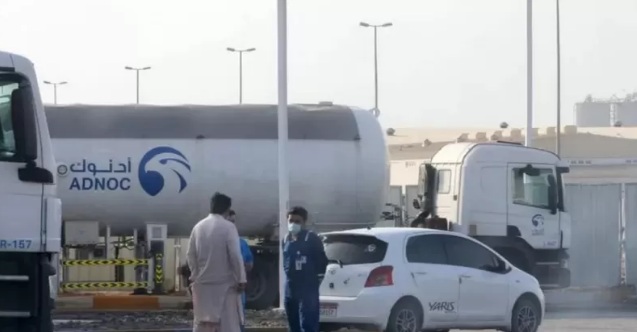
Abu Dhabi Drone Attack: At Least Three Dead In An Explosion In Abu Dhabi After A Drone Attack

"Small flying objects, possibly drones, were detected that fell in two areas and would have caused the explosion and fire," the police said.

At least three people died and six others were injured this Monday by an explosion caused by a fire in the industrial zone of Abu Dhabi, while the Emirate Police investigates whether it is an attack carried out with drones.

"The event caused the death of a Pakistani citizen and two Indian citizens, and another 6 suffered minor and moderate injuries," according to the official Emirati news agency WAM, which noted that the Police have managed to control the fire "that broke out this morning in the Mussafah area, near the depots of the Abu Dhabi National Oil Company (ADNOC), which caused the explosion of three fuel tanks".

Wednesday, November 17, 2021

Refugee Crisis | Escalation Of Violence On The Polish-Belarusian Border

Violence between refugees and security forces has again broken out on the border between Belarus and Poland. There were several injured.

Several people were injured in violent clashes between Polish security forces and refugees on the Belarusian border. Polish security forces said they used tear gas and water cannons against refugees after stones were thrown at them from their ranks. Seven police officers, a border guard and a soldier were injured. According to Belarusian sources, several refugees also had to receive medical treatment.

Saturday, November 13, 2021

Turkey Barred Iraqis, Syrians And Yemenis From Entering the European Union (EU)

Turkey has suspended ticket sales for Iraqi, Syrian and Yemeni nationals traveling to Belarus, Belarus has been a key destination for refugees in recent months and refugees have entered the European Union (EU) illegally. Trying to log in.

Dawn newspaper's report was announced after EU pressure by the Turkish Civil Aviation Authority, according to which he had refused to bring the citizens of Minsk, capital of Belarus from the Middle East.

The case began when thousands of EU asylum seekers entered Poland, Lithuania and Latvia over the summer, many still trying to enter or being deported.

Friday, November 5, 2021

The United States Will Sell $650 Million Worth Of Weapons To Saudi Arabia

The United States has approved a $650 million sale of surface-to-air missiles to Saudi Arabia.

According to the international news agency Al Jazeera, the Pentagon has issued a statement in this regard and said that this will be the first major arms deal with the Biden administration with the Gulf state.

The Pentagon said the State Department had approved the sale to help Saudi Arabia deal with current and future threats.

Sunday, October 31, 2021

Yemen Civil war | At Least 12 Dead In Explosion In Yemen | Myanmar Army Destroys Churches And Houses In An Act Of Revenge

Since the rebels took over the capital, the president has ruled from the southern port city of Aden. There has now been a serious explosion at the airport.

At least twelve people were killed and numerous others injured in an alleged bomb attack in Yemen , a country with civil war . The news agencies dpa and AFP report with reference to emergency services and a high-ranking representative of the security forces. There is no official information on the number of injuries. According to initial information, a truck exploded at the entrance to the city's airport.