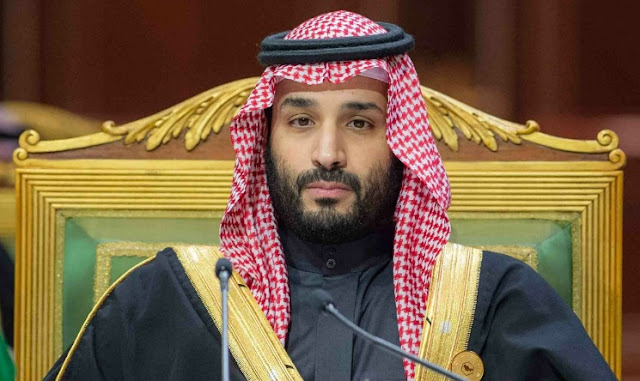
Due to the illness of King Salman bin Abdulaziz of Saudi Arabia, Crown Prince Muhammad bin Salman has taken full control of the kingdom even before he officially took over the throne.
According to the AFP news agency, 86-year-old Farman Rawa is seriously ill these days and due to his health concerns, Muhammad bin Salman, 36, has taken over all the affairs of the government.
These days, Salman bin Abdulaziz is rarely seen in public circles, and Muhammad bin Salman has been chairing meetings at the royal palace since welcoming foreign delegations.
At least eleven princes, four ministers and "dozens" of former ministers were arrested on Sunday in Saudi Arabia by order of an anti-corruption committee created hours before by King Salman bin Abdulaziz.
An operation that should allow Crown Prince Mohammed bin Salman, to consolidate his power. Meanwhile, the powerful leaders of the Saudi National Guard, an inner elite force, and the Navy have been sacked. These arrests and dismissals occurred a few hours after the creation, by royal decree, of an anti-corruption commission headed by the crown prince and strongman of the ultra-conservative kingdom, Mohammed Bin Salman, 32 years old and nicknamed MBS.
According to sources quoted by Al Arabiya, the committee reopened the investigation of two cases of corruption related to floods in the city of Jeddah in 2009 and the outbreak of the coronavirus, also known as the Middle East Respiratory Syndrome (SROM), which caused the death of half a thousand people between 2012 and 2015.
In front of the National Guard he was dismissed Prince Mobeib bin Abdulah, for reasons that were not specified, and will be replaced by Prince Khaled bin Ayaf.
The Minister of Economy and Planning, Adel al Faqieh, was relieved by Mohamed al Tuwaiyri, also for reasons not clarified by the royal house.
The commander of the Navy , Admiral Abdullah bin Sultan bin Mohammed al-Sultan, who is retiring, was replaced by the so far vice-admiral Fahd bin Abdulah al Gifaili.
The Saudi official SPA news agency reported that the purpose of the commission was to "preserve public money, punish corrupt people and those who profit from their position". The religious council quickly reacted to his Twitter account saying that the fight against corruption was "as important as the fight against terrorism."
The Prince MBS wants a "Moderate" Arabia
Controlling the main levers of the government, from defense to the economy, Crown Prince Mohammed bin Salman seems to seek to stifle internal disputes before any formal transfer of power by his father, King Salman, 81 years. At the end of October, MBS, from the young princely Saudi generation, promised a "Moderate" Arab, breaking with the image of a country long considered the exporter of Wahhabism, a rigorous version of Islam that has nourished number of jihadists around the world. "We will not spend 30 more years of our life accommodating extremist ideas and we are going to destroy them now," he said to the applause of participants in an economic forum dubbed "Davos in the desert".
He has launched several reform projects - driving rights for women and cinema openings in particular - that mark the greatest cultural and economic upheaval in the modern history of the kingdom. At the same time, he worked to strengthen his political grip on power, including in September a wave of arrests of dissidents, including influential religious and intellectuals. According to analysts, many of these dissidents were critical of the heir apparent foreign policy of the young crown prince, such as the boycott of Qatar, as well as reforms such as the privatization of state-owned enterprises and the reduction of state subsidies.



 Posts
Posts


