Translate

Search This Blog

Showing posts with label Iran Iraq Israel Syria Saudi Arab Shia Sunni Muslim Arab. Show all posts

Tuesday, June 9, 2026

Can Trump Bring Peace to the Middle East?

Discover the latest on the Iran-Israel conflict as it passes 100 days. Analysis of Trump's peace efforts, Netanyahu's stance, and what lies ahead for Middle East stability.

The ongoing conflict between Iran and Israel has now passed the 100-day mark, with developments that have left international observers scratching their heads and world leaders scrambling for solutions. What started as a regional dispute has evolved into one of the most volatile situations in the Middle East in decades.


The Situation Today

As of today, the Iran-Israel conflict continues to pose significant challenges to global stability. The past months have seen intense diplomatic maneuvering, with President Donald Trump repeatedly stating that an Iran deal is "imminent" a claim he has now made well over 30 times without a final agreement being reached.

Israeli Prime Minister Benjamin Netanyahu has taken a firm stance, repeatedly asserting that Israel has the right to self-defense. His government has authorized continued operations against Iranian targets, a move that has strained relations even with Israel's closest allies.

"It's a complicated situation," says one Middle East analyst who spoke on condition of anonymity. "Neither side seems willing to back down, yet both claim they want the same thing peace and security."

Monday, June 8, 2026

Iran-Israel Strikes Again And the Middle East Is Spiraling Back Into Chaos

What's really happening at the ceasefire's breaking point. The fragile peace in the Middle East just collapsed again.

For the first time since that shaky ceasefire took effect in April, Iran launched strikes directly at Israel over the weekend. It's been roughly 100 days since the original agreement, and honestly, barely two months into what was supposed to be a real break from the fighting. Now? We're right back where we started or maybe even worse.

Let me break down what's actually going on here, because there's a lot more happening than just the obvious back-and-forth airstrikes.

Sunday, June 7, 2026

Viral Videos From Central Tehran Spark Heated Debate Over Armed Resistance in Iran

Videos from central Tehran showing calls for armed resistance have gone viral, sparking intense debate about the future of political opposition in Iran and the role of foreign powers.

A startling scene unfolded on the streets of Iran's capital recently, sending waves across social media platforms and sparking intense discussions about the future of political resistance in the country. Videos circulating online captured a man driving through central Tehran near the iconic Milad Tower while prominently displaying a sign that called for the Iranian people to take up arms against the current regime. The footage quickly went viral, dividing opinion both within Iran and among observers around the world.

The incident has ignited a fierce debate about the nature of resistance, the role of foreign powers in Iran's internal affairs, and what path forward if any exists for those seeking political change. As the videos continue to spread, analysts, activists, and ordinary citizens are grappling with what this moment might mean for a nation that has long navigated the complex currents of domestic opposition and international scrutiny.

Monday, June 1, 2026

Trump's Iran Rhetoric: What's Really Driving the Tough Talk?

Is It Israeli Pressure, Political Calculus, Or Something Else Entirely?

Let's be honest here when Donald Trump starts talking tough on Iran, people immediately start looking for explanations. And lately, there's been plenty of chatter about what's actually behind the president's sharp words. Some officials in Tehran have pointed the finger directly at the Israeli lobby, claiming it's driving Washington's harder line. Meanwhile, here's the thing: the situation on the ground is honestly more complicated than either side is letting on.

So what's really going on? Is Bibi pulling strings in the Oval Office, or is this just good old-fashioned political theater? Let's unpack this together.

Sunday, May 24, 2026

The Strait of Hormuz: Why This Chokepoint Remains the World's Most Dangerous Flashpoint

Discover why the Strait of Hormuz remains the world's most dangerous flashpoint. Analysis of Iran-US tensions, strategic control, and what it means for global oil markets in 2026.

Let me be direct about something that doesn't get nearly enough attention: the Strait of Hormuz is perhaps the most strategically important piece of real estate on Earth, and everyone from Washington to Tehran knows it. 

No matter what Donald Trump is planning or what any future administration might contemplate Iran has demonstrated, time and again, that it can inflict severe disruption on global energy markets through its chokehold over this narrow shipping lane. And while successive U.S. presidents have managed to limit the economic pain so far, the fundamental math of the situation hasn't changed. One country controls the to a waterway through which roughly one-fifth of the world's oil passes. That's not a problem you solve with tougher rhetoric or even sanctions. It's a structural vulnerability that has defined Middle East geopolitics for decades.

I want to unpack why this matters so much, how we got here, and what the future might hold because understanding the Strait of Hormuz isn't just academic. It affects your gas prices, global markets, and potentially whether the world falls into recession. And no matter how powerful the United States military happens to be, there are some geographical realities that cruise missiles simply cannot change.

Saturday, May 23, 2026

Rising Tensions: Pentagon Updates Military Readiness as Trump Administration Weighs Iran Strikes Alongside Diplomatic Path

The situation between the United States and Iran has entered one of its most precarious phases in years. Behind the scenes at the Pentagon and across multiple government agencies, there's a familiar but unsettling buzz of activity. 

Military planners are revisiting target folders that haven't been touched in earnest for quite some time, while diplomats simultaneously keep communication lines open in hopes of avoiding an all-out confrontation.

The Trump administration, according to multiple sources, is actively preparing for the possibility of new military strikes against Iran but no final decision has been made yet. This isn't just rhetorical posturing from Washington. On the ground, the practical implications are already becoming visible. U.S. officials have begun updating military readiness levels across several installations in the Middle East, and perhaps most tellingly, leave has been canceled for certain personnel units. When the military starts pulling people off planned time away from their families, you know something serious is brewing beneath the surface.

The Intelligence Behind the Preparations

What changed to bring us to this point? The answer lies in a complex web of regional provocations, intelligence assessments, and calculations about what Iran might do next. The administration has been weighing evidence suggesting that Iran or its regional proxy forces were preparing operations that American intelligence deemed unacceptable threats to U.S. interests or personnel in the region.

Wednesday, May 20, 2026

The Middle East on the Edge: Israel, Iran, and the Shadows of War | The UAE's Dangerous Game

The Middle East has never exactly been a place for the faint of heart, but lately, the tension has reached something altogether different a slow-burn pressure cooker that seems perpetually moments away from boiling over. 

According to reports from Times of Israel, Israel is once again dusting off its war plans against Iran, and this time, the stage feels different. The UAE, that gleaming desert powerhouse, has apparently thrown its weight behind Israel, offering bases and logistical support in what can only be described as a dramatic realignment of Gulf politics. Meanwhile, Iran's Revolutionary Guards have delivered a warning to the United States that sounds less like diplomacy and more like a promise: 

"If the US-Israeli enemy attacks Iran again, the war will extend beyond the region."

That's not just posturing. When a military force with the reach and capability of the IRGC starts talking about expanding conflict beyond national boundaries, the entire global community should pay attention.

We've been here before, haven't we? The pattern has become almost ritualistic at this point. Threatened deadlines, whispered negotiations, last-minute phone calls from Gulf capitals, and then... silence. A pause. Another round of talks that goes nowhere. Rinse and repeat. It's enough to make anyone wonder whether this endless dance of threats and ultimatums is actually a strategy or simply the natural state of affairs in a region that has known peace only in brief, uneasy spurts.

Saturday, May 16, 2026

Arab Regimes Playing with Fire: Why Gulf Countries Can't Hide While the House Burns

The old saying goes that when your neighbor's house catches fire, you better start checking your own curtains. 


Yet here we are in May 2026, watching Arab regimes in the Gulf make the same mistake leaders have made for centuries thinking that geography alone will protect them when the flames are spreading fast. The current US-Israel military campaign against Iran has exposed something many of us already suspected: most of these countries aren't regional players anymore. They're spectators watching a war they helped create, hoping somehow they'll escape the blast radius.


Saudi Arabia stood alone in refusing to become a pawn in someone else's war. The kingdom took hits, faced pressure, and still said no. That's not nothing. Meanwhile, countries like the UAE rolled out the red carpet for American and Israeli forces, then tried to tell the world they were just "managing relationships." Let's talk about what's really happening across the Gulf right now, because the narrative being spun in capital cities doesn't match what we see on the ground.

Monday, May 11, 2026

Secret Israeli Military Base Discovered in Iraqi Desert: What We Know About This Explosive Revelation

A shocking discovery that's sending shockwaves through the Middle East


Imagine scanning satellite images of a remote desert and spotting something that could reshape the entire geopolitical landscape of the Middle East. That's exactly what happened recently, and the implications are nothing short of staggering.


According to a bombshell report from The Wall Street Journal, Israel established a secret military base deep in the Arabian Desert of Iraq with the full knowledge of the United States. This wasn't some makeshift hideout or temporary encampment. Sources close to the matter describe it as a sophisticated operational hub, set up shortly before the outbreak of conflict, designed to support Israeli forces during strikes against Iran. The base served dual purposes: it functioned as a staging ground for special forces operations and as a logistics center for the Israeli Air Force.


The revelation has opened a Pandora's box of questions about American involvement, Iraqi sovereignty, and the true extent of military operations being conducted across Middle Eastern borders without official acknowledgment.


What the satellite images reveal


Correspondents investigating the WSJ report didn't just take the story at face value. They dug deeper, and what they found in nighttime satellite imagery was nothing short of remarkable. The base was located approximately 180 kilometers west of Najaf, south of Baghdad right in the heart of the Iraqi desert, far from prying eyes and populated areas.

Monday, April 6, 2026

A Potential Turning Point: Iran and the U.S. Nearing a Deal to Reopen Strait of Hormuz | Updated for Global Reach

There’s a buzz in the news today that feels like one of those rare, breath-holding moments in global politics. Rumors are swirling that Iran and the United States might be on the brink of a breakthrough after years of tension. According to a source briefed on the matter (via Reuters), a proposal to end hostilities pot that once seemed as likely as a snowstorm in the Sahara is now close to finalizing. And if this plan moves forward, it could reopen the Strait of Hormuz by today. Let’s unpack what this could mean and why it matters.

A Sensitive Strait, A High-Stakes Move

The Strait of Hormuz isn’t just another patch of ocean it’s a lifeline. Over 20% of the world’s oil flows through this narrow waterway, connecting the Persian Gulf to the open sea. For years, tensions between Iran and the U.S. have turned this critical chokepoint into a flashpoint. The idea of it reopening smoothly, without the shadow of confrontation, is a development that would send ripples across global markets and geopolitics.

So, what’s changed? A diplomatic proposal has quietly emergedaced, reportedly backed with enough nuance to address both sides’ red lines. While details are scarce (and rightly so, given the sensitivity nature), the mere possibility that talks are nearing a resolution is enough to shift the mood from “will they, won’t they” to “what happens next?”

Sunday, April 5, 2026

US-Israeli Attacks on Iran | Clash of Narratives: U.S. Hails Daring Rescue, Iran Claims Shoot-downs and Captures — What Really Happened?

The U.S. claims a historic military rescue mission, but Iran says American pilots were captured. Unpack the conflicting narratives, military capabilities, and global implications in this in-depth analysis of the latest Iran-U.S. standoff.

There’s a story unfolding right now that feels like it was ripped straight from a high-stakes military thriller. One side calls it a heroic, near-impossible rescue pulled off with precision. The other? They’re painting it as a devastating defeat, claiming captured pilots and downed jets. Welcome to one of the most confusing, charged moments in recent U.S.-Iran tensions and the world is scrambling to figure out what actually went down. It’s a classic case of “he-said, she-said,” but the stakes couldn’t be higher. We’re talking about military lives, high-tech hardware, and a rescue mission that depending on who you believe was either a miracle or a catastrophe.

Here is the breakdown of what’s actually happening right now.

The View from Washington: A "Daring" Success

President Donald Trump made headlines by declaring that the U.S. military had executed 

one of the most daring search and rescue operations in American history

According to the White House, the mission was a surgical success, aimed at recovering missing pilots. The tone from the US side is one of triumph. They’re painting a picture of elite forces moving in under the radar, getting their people, and getting out. It’s the kind of story that boosts national morale and reinforces the image of US military precision. Trump described the operation as a testament to American bravery, signaling that the pilots are safe and the mission is officially a "win."

The View from Tehran: A "Massive" Failure

But if you flip the channel to Iranian state media or look at the statements coming out of the Islamic Revolutionary Guard Corps (IRGC), you get a story that is almost unrecognizable.

Iran isn't just saying the mission failed; they’re claiming they decimated the US rescue fleet. In a series of bold statements, the IRGC claims they downed a staggering list of American aircraft, including:

  • Apache Helicopters
  • The A-10 Warthog
  • F-35 Lightning II
  • F-15 Eagles

More than that, Iran claims they’ve captured all the pilots involved in the rescue attempt. They are calling the US report a total fabrication and "fake news," aimed at covering up a tactical nightmare.

Friday, April 3, 2026

The 2026 Iran War: A Tipping Point in Global Geopolitics | Impact of Iran war on oil | Operation Epic Fury, the U.S.-Israeli military campaign

As the Iran War enters its sixth week, oil prices soar past $120 and global tensions reach a boiling point. We break down Operation Epic Fury, the strategic strikes, and the grim reality of a conflict with no clear end in sight.

The Iran War: $120 Oil, Shattered Infrastructure, and a Perilous Road Ahead.

The world holds its breath. We’re now six weeks into a conflict that has redrawn the geopolitical map of the Middle East and sent shockwaves through the global economy. What began with a series of unprecedented strikes has escalated into a grinding, devastating war with no clear exit strategy.

The mood is tense, the stakes are astronomical, and the path forward is shrouded in uncertainty. As a commentator who has watched this region for decades, the rapid and brutal progression of events is both staggering and deeply concerning.

Thursday, April 2, 2026

Is the NATO Alliance Crumbing? Trump Calls NATO a "Paper Tiger" as Iran Tensions Reach a Breaking Point. The Shifting Dynamics of the U.S.-Iran-Israel Triangle: A Deep Dive into the Latest Tensions


For decades, the North Atlantic Treaty Organization (NATO) has been viewed as the unshakeable bedrock of Western security. But if you’ve been following the latest news on Iran, U.S. and Israel conflict, you know that the "unshakeable" just got a massive wake-up call.

Why now? Because, according to Trump, when the smoke cleared during the escalating tensions with Iran, the U.S. found itself standing alone.

In a bombshell interview with The Telegraph, former President Donald Trump didn’t just reignite debate over U.S. foreign policy he lit a match under the very foundation of Western military alliance. 

The "Paper Tiger" Rhetoric:

“I was never swayed by NATO. I always knew they were a paper tiger, and [Russian President Vladimir] Putin knows that too, by the way,” 

he said, delivering one of the most provocative foreign policy statements since leaving office. With rising tensions in the Middle East and the Strait of Hormuz once again a flashpoint, Trump’s comments signal more than nostalgia for his “America First” doctrine they suggest a potential seismic shift in global power dynamics should he return to the White House.

Friday, March 27, 2026

Donald Trump and the Hormuz Strait: A Closer Look at Energy Independence Claims


In a recent statement that has sparked debate, former President Donald Trump asserted, “We don’t need the Hormuz Strait. We have so much oil, our country is not affected by this.” The Hormuz Strait, a critical global energy artery, is one of the world’s most vital checkpoints, through which approximately 20% of the world’s oil supply passes annually. Trump’s claim reflects a broader narrative of energy independence rooted in the U.S. shale revolution, which has significantly reduced American reliance on foreign oil. However, the validity of this statement requires a nuanced examination of both domestic energy production and the complex realities of global markets.

Tuesday, March 17, 2026

From Shadow War to Direct Confrontation: Navigating the New Reality of Iran-Israel-US Tensions

JERUSALEM/TEHRAN/WASHINGTON — The Middle East remains on a knife-edge as the long-standing "shadow war" between Israel and Iran has definitively moved into the light. Following a series of unprecedented direct military exchanges and shifting diplomatic red lines, the regional landscape has been fundamentally altered, leaving the United States in the precarious position of attempting to prevent a total regional conflagration.

GLOBAL CONFLICT WATCH – The world remains on high alert as the volatile shadow war between Iran and the alliance of the United States and Israel has erupted into unprecedented direct military engagement, triggering a complex geopolitical crisis with far-reaching consequences for global security and the Gulf region.

Monday, August 5, 2024

Escalating Tensions: Iran Informs Neighboring Countries of Imminent Attack on Israel

In a startling turn of events, Iran has reportedly informed its neighboring countries of its plans to launch a direct attack against Israel. This announcement has sent shockwaves across the international community and raised concerns about the potential for a wider regional conflict.

According to reports, Iran's Supreme Leader, Ayatollah Ali Khamenei, has given the green light for a military strike against Israel in retaliation for the killing of Hamas leader Ismail Haniyeh in Tehran. The attack is said to be a direct response to what Iran perceives as an act of aggression by Israel.

Thursday, July 11, 2024

NATO Opens First Middle East Office in Jordan: A Milestone in Regional Security Cooperation

In a significant development that underscores the evolving dynamics of international security alliances, the North Atlantic Treaty Organization (NATO) has announced the establishment of its first liaison office in the Middle East, choosing Jordan as its host. This strategic move marks a new chapter in NATO's engagement with the Middle East and North Africa (MENA) region, aiming to enhance cooperation and address shared security challenges. The office, located in the capital city of Amman, will serve as a hub for dialogue, coordination, and operational collaboration between NATO and Jordan, as well as potentially with other regional partners.

Tuesday, August 30, 2022

Supporters Of Shiite Leader Al-Sadr Evacuate Government Quarters In Baghdad

After riots in Iraq, the Shiite preacher Muqtada al-Sadr called on his followers to withdraw. A nationwide curfew was lifted.

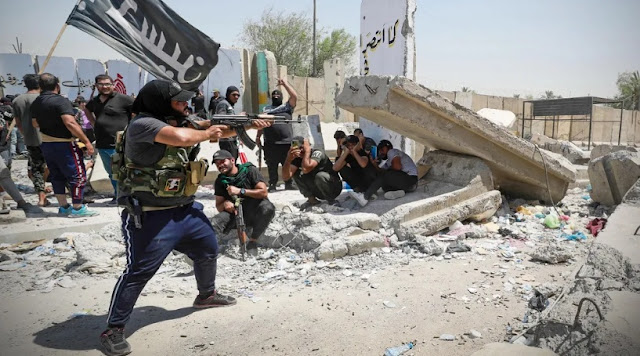
After two days of violent protests that left more than 37 dead, the first supporters of Iraqi Shiite leader Moqtada al-Sadr left the government district in Baghdad. In a speech at his headquarters, al-Sadr had previously urged his supporters to evacuate the so-called Green Zone in the center within 60 minutes.

If they don't do this, he himself will withdraw from his own movement, al-Sadr said in a televised address. He apologized to the Iraqi people. He had hoped for peaceful protests.

The unrest in Iraq broke out after al-Sadr's announcement that he intends to withdraw from politics. He accused rivals of having ignored calls for reforms. His followers then took up arms. Several people were killed in the riots on Monday.

Monday, August 8, 2022

MIDDLE EAST: Truce Between Israel And Islamic Jihad In Worst Escalation Since 2021

Although the ceasefire may be short-lived, it could end the fighting.

After three days of attacks, Islamic Jihad and Israel began a truce this Sunday at 11:30 p.m. that could end the worst escalation since May 2021. The Israeli government did not take long to accept the ceasefire after beheading the Jihad military leadership in the Gaza Strip while the militia, severely beaten and wishing to carry out a greater retaliation for the attacks, finally agreed to Egyptian mediation and pressure from its older brother and at the same time rival, the Islamist group Hamas, which did not intervene in the confrontation against their common enemy.

Tuesday, January 18, 2022

UAE: Houthi Rebels Threaten 'More Attacks' In UAE, Reports Of Casualties Following Saudi Coalition Bombing In Sanaa

Yemen's Houthi rebels have threatened more airstrikes if the United Arab Emirates does not stop its offensive against Yemen.

A spokesman for the Houthi rebels warned ordinary citizens and international companies to stay away from key installations in the UAE, where more attacks could take place in the future.

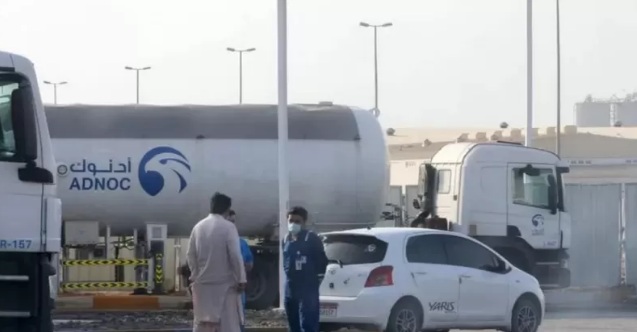
One Pakistani and two Indian nationals were killed and six others were injured when three oil tankers exploded in the port area of ​​Abu Dhabi in the United Arab Emirates on Monday.