Exclusive details on UAE's covert airstrikes against Iran during the regional conflict in coordination with US and Israel. How the MBZ-MBS rift, OPEC exit, and hidden Israeli alliance are reshaping Persian Gulf politics in 2026.
The truth has a way of surfacing, even when powerful hands work desperately to bury it. Nearly two years after the most intense chapter of regional hostilities, the Wall Street Journal has dropped a bombshell that is sending shockwaves through Persian Gulf diplomatic circles: the United Arab Emirates carried out dozens of direct airstrikes against Iranian territory all while publicly maintaining a stance of strict neutrality.
Let that sink in for a moment.
Here was a nation that publicly declared it would not allow its soil to be used for strikes against Iran. Behind closed doors? It became something else entirely the quiet but lethal military arm of a coalition that included the United States and Israel.
And now everyone is asking the same uncomfortable question: What happens when your neighbors find out you've been stabbing them in the back?
Saudi Arabia refused U.S. access to bases for Project Freedom, forcing Trump to suspend the Hormuz operation. Explore the diplomatic fallout and what it means for Gulf security.
There's a old saying in diplomacy: "Close friends make the toughest enemies." Right now, the relationship between the United States and Saudi Arabia is testing that theory in a pretty dramatic way.
The Kingdom essentially told Washington to take a hike when it came to "Project Freedom" President Trump's high-profile mission to secure the Strait of Hormuz. And here's the thing: they didn't just say no. They slammed the door so hard that the whole operation had to be put on pause.
Let me walk you through what happened, why it matters, and what it says about the shifting power dynamics in one of the world's most volatile regions.
What Exactly Was Project Freedom?
Before we get into the drama, let's talk about what Project Freedom actually was. The Strait of Hormuz is one of the world's most critical chokepoints roughly 20% of all oil traded worldwide passes through those waters. When tensions between the U.S. and Iran started heating up, the Trump administration wanted to establish a visible military presence there to deter any Iranian funny business.
The US President has met the Saudi Arabian Crown Prince. He blamed Mohammed bin Salman for the murder of journalist Jamal Khashoggi.
US President Joe Biden said he warned Saudi Crown Prince Mohammed bin Salman of future acts of violence against government critics at their meeting in Jeddah. He made it clear to the heir to the throne that another act like the murder of journalist and government critic Jamal Khashoggi in October 2018 would result in a "response" from the United States, said Biden after his consultations with bin Salman in the Saudi Arabian port city.
Pedro Sánchez is the first acting head of Spanish government to acknowledge having been spied on by the Israeli Pegasus software, with which Morocco also infiltrated one of the mobile phones of French President Emmanuel Macron.
The Spanish Government has reported this Sunday that the mobile phones of the Prime Minister, Pedro Sánchez and the Defense Minister, Margarita Robles, were subjected to "illegal and external" wiretapping by the Pegasus program, according to two technical reports from the Cryptologic Center National. It is the first time that espionage with this software of an acting head of government has been confirmed.
Already last summer, an investigation uncovered that Morocco had infected one of the mobile phones of the President of France, Emmanuel Macron, with Pegasus, who however did not confirm the information.
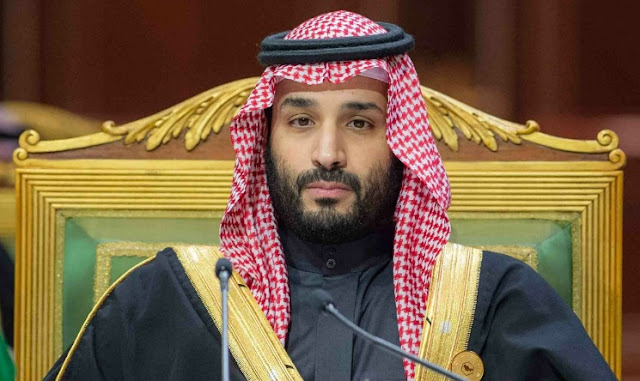
Due to the illness of King Salman bin Abdulaziz of Saudi Arabia, Crown Prince Muhammad bin Salman has taken full control of the kingdom even before he officially took over the throne.
According to the AFP news agency, 86-year-old Farman Rawa is seriously ill these days and due to his health concerns, Muhammad bin Salman, 36, has taken over all the affairs of the government.
These days, Salman bin Abdulaziz is rarely seen in public circles, and Muhammad bin Salman has been chairing meetings at the royal palace since welcoming foreign delegations.
Saudi Arabia has announced the construction of an amazing city. It will be an 8-cornered city floating in the Red Sea.
According to a statement issued by the Saudi government, the city of Oksajon will be in a corner of Newem.
Newem is the largest construction project in Saudi Arabia's history at a cost of 500 billion. A shocking concept video of Oxajon was shared on Neum's official Twitter account.
Recognizing Israel would give Iran, Qatar and Saudi Arabia a chance to kill
Saudi Crown Prince Mohammed bin Salman, like the United Arab Emirates and Bahrain, flatly refused to recognize Israel. Haiim Saban, an American-born Israeli billionaire , made this claim in an exclusive interview with the Israeli newspaper Harris. Saban says Prince Mohammed bin Salman fears that if Saudi Arabia recognizes Israel, Iran, Qatar and the Saudi people will have a chance to assassinate him. The Israeli billionaire also attended the UAE, Bahrain and Israel peace agreement ceremony at the White House on September 15. He added that Saudi King Salman bin Abdulaziz was opposed to recognizing Israel and wanted to implement the Arab-Israeli peace plan agreed in 2002 in the Saudi capital, Riyadh. Saban added that religious circles have a strong influence on the Saudi people, while recognizing Israel could jeopardize Saudi Arabia's monopoly on the Holy Shrines and its reputation in the Islamic world. It may be recalled that the United Arab Emirates had announced a peace agreement with Israel on August 13 and Bahrain on September 11 and the two countries had signed the agreement on September 15 at the White House. Following the agreement, the number of Arab states recognizing Israel has risen to four, followed by Egypt in 1979 and Jordan in 1994. Now another Arab country, Sudan, has agreed to a peace deal with Israel. Sudan is also an important country in that it has fought against Israel in the past.
At least eleven princes, four ministers and "dozens" of former ministers were arrested on Sunday in Saudi Arabia by order of an anti-corruption committee created hours before by King Salman bin Abdulaziz.
An operation that should allow Crown Prince Mohammed bin Salman, to consolidate his power. Meanwhile, the powerful leaders of the Saudi National Guard, an inner elite force, and the Navy have been sacked. These arrests and dismissals occurred a few hours after the creation, by royal decree, of an anti-corruption commission headed by the crown prince and strongman of the ultra-conservative kingdom, Mohammed Bin Salman, 32 years old and nicknamed MBS.
According to sources quoted by Al Arabiya, the committee reopened the investigation of two cases of corruption related to floods in the city of Jeddah in 2009 and the outbreak of the coronavirus, also known as the Middle East Respiratory Syndrome (SROM), which caused the death of half a thousand people between 2012 and 2015.
In front of the National Guard he was dismissed Prince Mobeib bin Abdulah, for reasons that were not specified, and will be replaced by Prince Khaled bin Ayaf.
The Minister of Economy and Planning, Adel al Faqieh, was relieved by Mohamed al Tuwaiyri, also for reasons not clarified by the royal house.
The commander of the Navy , Admiral Abdullah bin Sultan bin Mohammed al-Sultan, who is retiring, was replaced by the so far vice-admiral Fahd bin Abdulah al Gifaili.
The Saudi official SPA news agency reported that the purpose of the commission was to "preserve public money, punish corrupt people and those who profit from their position". The religious council quickly reacted to his Twitter account saying that the fight against corruption was "as important as the fight against terrorism."
The Prince MBS wants a "Moderate" Arabia
Controlling the main levers of the government, from defense to the economy, Crown Prince Mohammed bin Salman seems to seek to stifle internal disputes before any formal transfer of power by his father, King Salman, 81 years. At the end of October, MBS, from the young princely Saudi generation, promised a "Moderate" Arab, breaking with the image of a country long considered the exporter of Wahhabism, a rigorous version of Islam that has nourished number of jihadists around the world. "We will not spend 30 more years of our life accommodating extremist ideas and we are going to destroy them now," he said to the applause of participants in an economic forum dubbed "Davos in the desert".
He has launched several reform projects - driving rights for women and cinema openings in particular - that mark the greatest cultural and economic upheaval in the modern history of the kingdom. At the same time, he worked to strengthen his political grip on power, including in September a wave of arrests of dissidents, including influential religious and intellectuals. According to analysts, many of these dissidents were critical of the heir apparent foreign policy of the young crown prince, such as the boycott of Qatar, as well as reforms such as the privatization of state-owned enterprises and the reduction of state subsidies.




 Posts
Posts


