Translate

Search This Blog

Showing posts with label Afghanistan. Show all posts

Tuesday, May 26, 2026

How Much Is the 2026 Iran War Costing America? Here’s the First Big Number: $29 Billion

The pentagon has spoken, and the number is staggering. America's military involvement in the 2026 Iran conflict has already cost U.S. taxpayers $29 billion dollars, and that's just the beginning. 

This preliminary figure, released by defense officials in recent weeks, offers the first concrete glimpse into the financial scope of what many analysts are calling the most expensive military engagement in the Middle East since the wars in Iraq and Afghanistan.

But what does this $29 billion figure actually cover? Where is the money going? And perhaps most importantly for American families watching their tax dollars flow overseas is this just the tip of the iceberg?


Breaking Down the $29 Billion Price Tag

The Pentagon's initial estimate encompasses several major categories of expenditure that might surprise the average American. Deployment costs alone account for a significant portion, including the transport of personnel, equipment, and supplies across continents to a region that sits roughly 7,000 miles from Washington, D.C. When you factor in the repositioning of carrier strike groups in the Persian Gulf, the establishment of forward operating bases, and the logistical nightmare of maintaining supply lines in a hostile environment, the numbers start to make sense.

Tuesday, May 12, 2026

When Superpowers Bleed: The Uncomfortable Truth About America's Iran Crisis, That's Reshaping Global Power

Analysis of the 2026 US-Israel war against Iran. How American military power failed, Tehran's resilience, and the global implications for Taiwan and Ukraine.


Here's something that would have seemed unthinkable just three months ago: the United States is bleeding through billions of dollars, watching its military credibility crumble, and finding itself trapped in a conflict it can't dominate, can't escape, and can't afford. Almost three months into what was supposed to be a swift, decisive campaign against Iran, the situation tells a story that no one in Washington or Tel Aviv wants to admit out loud.


The strikes that were supposed to bring Tehran to its knees have instead produced something far more dangerous a protracted standoff with no exit strategy, no clear victory conditions, and a price tag that reads like science fiction. Trump administration officials spoke of "decapitation strikes" and "crippling blows" in the opening days. Now, those same officials find themselves calculating how much longer the American treasury can sustain a war that reshapes nothing while eroding everything.


And the most damning part? Tehran hasn't budged. Not an inch. Not a single concession. Instead, they've shown a kind of stubborn resilience that caught everyone off guard, and they've reminded the world that superpower doesn't mean invulnerable.

Sunday, May 10, 2026

The Complicated Dance: Understanding US-Pakistan Relations in a Changing World

There's an old saying in international relations that countries don't have permanent friends, they have permanent interests. If ever there was a relationship that embodied this truth, it's the one between the United States and Pakistan. Love them, hate them, or something in between this decades-long saga has had more twists and turns than a Hollywood thriller, and honestly, at this point, even seasoned diplomats throw up their hands in exasperation.


Let's be real here. The US-Pakistan relationship has been one of the most dysfunctional partnerships in modern geopolitical history. We've called them allies, then adversaries, then frenemies, then something else entirely. We've poured billions into their military, then cut them off. We've praised them as partners in the war on terror, then criticized them for harboring the very people we were fighting. It's enough to make your head spin.


So what's really going on here? Why does this relationship keep stumbling from crisis to crisis? And perhaps more importantly, where does it go from here? Buckle up, because we're about to take a deep dive into one of the most complicated relationships in the world of international politics.

Wednesday, April 22, 2026

Iran US war 2026: Day 54 Ceasefire & Pakistan's Pivotal Role Explained

As Trump extends the fragile ceasefire on Day 54, we break down Pakistan's surprising role in the Iran-US conflict. Is it mediating or just messaging? And who's really calling the shots in Islamabad?


Iran 2026: On Day 54, a Fragile Ceasefire Holds. But All Eyes Are on Pakistan.


We’re on day 54.


For fifty-four days, the world has been holding its breath, watching a conflict that many feared would spiral out of control. The 2026 Iran-US confrontation, a tinderbox of geopolitical tensions, has been paused for now. And in a move that has analysts scrambling, President Donald Trump, back in the Oval Office, has just extended the ceasefire another 72 hours.


But here’s the twist that no one saw coming: the key player keeping this fragile peace from splintering isn’t in Geneva, Moscow, or Beijing. It’s in Islamabad.

Tuesday, April 21, 2026

Pakistan peace talks Iran | Pakistan’s Surprising New Role in the Middle‑East: From Nuclear Power to Iran‑Peace Mediator

Pakistan, a nuclear‑armed nation that doesn’t recognize Israel, is hosting Iran peace talks. Learn how US‑Pakistan crypto, mineral and security deals paved the way.

Why This Story Matters Right Now? 

If you scan the newsfeed today, you’ll see a lot of chatter about the endless tug‑of‑war between Iran and the United States. What many people don’t expect is that Pakistan – a nuclear‑armed state that officially does not recognize Israel – has stepped up as a host for peace talks aimed at ending the Iran conflict.


Why is this noteworthy?

Strategic pivot: Pakistan has traditionally been seen as a regional player focused on its own security challenges (Kashmir, Afghanistan, internal terrorism). Taking on a diplomatic mantle in the Persian Gulf signals a broader, more ambitious foreign‑policy vision.

U.S.‑Pakistan rapprochement: After years of frosty ties, Washington and Islamabad are warming up again, thanks largely to practical deals in crypto, mineral extraction, and counter‑terrorism cooperation.

Potential ripple effects: If these talks bear fruit, they could reshape the balance of power in the Middle East, affect global energy markets, and even open new doors for trade between Pakistan and the West.


Let’s break down how we got here, what’s at stake, and why you should keep an eye on this unfolding drama.

Saturday, April 18, 2026

Trump's Pakistan Praise: A Diplomatic Curveball That Has India Watching Closely

Donald Trump's repeated praise for Pakistan & General Asim Munir as US-Iran mediators is a major diplomatic shift. We analyze what this means for India, the fragile ceasefire, and the potential for a unprecedented presidential trip.

Okay, let's talk about something that’s been dominating my foreign policy feed lately. It feels like we’ve been teleported back to 2018. Donald Trump is back in the headlines, and he’s singing praises for a country that often plays the role of geopolitical wildcard: Pakistan.

And he’s not being subtle about it.

For at least the third time in a week, the U.S. President has publicly thanked Pakistan and its army chief, General Asim Munir, whom he colorfully dubbed the “Great, Great Field Marshal.” The reason? For allegedly mediating behind-the-scenes talks between the U.S. and Iran, two nations whose relationship is, to put it mildly, frosty.

This isn't just a throwaway comment. It's part of a pattern that has analysts from Washington to New Delhi scrambling to connect the dots. What’s really going on? And more importantly, how is India—Pakistan's arch-rival and a key U.S. partner—reading this sudden romance?

Thursday, April 16, 2026

The Great Mediation Shift: Why the US is Suddenly Touting Pakistan as the Key Player

Did Modi ask Trump for help? The US calling Pakistan the "only mediator" right after a Modi-Trump call signals a major power shift. We break down the embarrassing implications for India's strongman image.

So, here’s something that made a lot of folks in the foreign policy world do a double-take this week.

Just hours after a reported 40-minute phone call between Prime Minister Narendra Modi and President Donald Trump, Trump's press secretary, Karoline Leavitt, made a striking statement. She referred to Pakistan as the “only mediator” capable of brokering deals in the region.

Let that sink in for a moment.

Coincidence? The timing is… remarkable, to say the least. It’s the kind of synchronicity that has analysts and diplomats from Delhi to Washington scrambling to read the tea leaves. It’s hard not to connect the dots and wonder: Was this a key ask on that call? Is the self-proclaimed strongman, Modi, who has built a reputation on muscular, unilateral action, now actively seeking a helping hand from a traditional rival?

Tuesday, March 31, 2026

Pakistan’s Unlikely Rise as a Mediator in the Iran-US-Israel Conflict: Decoding the Diplomatic Shift

Dive into the latest news on Iran, U.S., and Israel conflict as we uncover how Pakistan secured a surprising role in brokering talks. Explore the geopolitical chess moves, Trump-era ties, and Pakistan’s strategic leverages in this high-stakes standoff.

The Tipping Point: January 2020 — A World on Edge

When a U.S. drone strike killed Iranian General Qasem Soleimani in Baghdad, the world held its breath. Tehran vowed “harsh retaliation.” Washington braced for missile strikes. Israel, a key U.S. ally, readied its Iron Dome. The Persian Gulf became a powder keg. And in those tense 72 hours, as headlines screamed of imminent war, a discreet phone call came through from Islamabad.

Yes Pakistan. The nation more often associated in Western media with regional instability or counterterrorism struggles played a pivotal, under-the-radar role in helping the Trump administration navigate one of its most volatile foreign policy crises—the brink of war with Iran. And the twist? It wasn’t through military might or economic leverage. It was through quiet diplomacy, geopolitical nuance, and a relationship rebuilt with the White House after years of frost.

Saturday, May 7, 2022

Taliban Reintroduce Mandatory Headscarf In Afghanistan

This is the most severe restriction on women's freedom since the Taliban seized power in August.

The Taliban government announcement this Saturday, of a decree to force them to dress modestly and regulate their clothing. The Taliban Supreme Leader, Hibatullah Akhundzada, has announced the rule, which makes it mandatory to cover one's face in public and provides 'warnings' and penalties for non-compliance.

The decree comes with the approval of the Ministry for the Promotion of Virtue and the Prevention of Vice, a body reintroduced by the authorities of the Islamic Emirate of Afghanistan after its return to power last summer, taking advantage of the disbandment of international troops.

Friday, April 22, 2022

Today News: Afghanistan || Explosion In Mosque & Israel || New Riots In Jerusalem

At least 20 people have been killed or injured in an attack in Kunduz. Afghanistan is experiencing a new wave of violent attacks.

Authorities say dozens of people have been killed in an explosion at a mosque in the northern Afghan city of Kunduz. Twenty people were killed or wounded, Kunduz province commander Kari Badri said. The Tolonews broadcaster reported at least 30 dead or injured, citing security circles. It was initially unclear who was behind the attack.

According to Afghan media reports, there were also explosions in other cities. Many people were killed and wounded in attacks in several parts of the country on Thursday.

Friday, March 18, 2022

Afghanistan: Taliban Allow Afghan Girls Back Access To Education

Afghan girls will soon be able to attend secondary schools again. Human Rights Watch warns against optimism.

The Taliban will allow girls to take part in secondary school classes again next week. "All schools will be opened to all boys and girls," said Kabul Education Ministry spokesman Asis Ahmad Rajan.

However, girls should only be taught separately from boys and only by female teachers. In rural areas with few teaching staff, older teachers could, exceptionally, also take over the teaching of the girls.

Sunday, February 6, 2022

Mali, The 'Afghanistan' Of France?

The hostility of the Malian military junta towards the presence of French troops and their failure in the fight against terrorism has pushed Paris to rethink its deployment in the Sahel while Russia increases its presence and influence.

The Sahel, and specifically Mali, is on its way to becoming France's Afghanistan. The rupture between Paris and Bamako that has been staged with the expulsion of the French ambassador on Monday, has made the Elysee rethink its mission to combat jihadism.

Since a military junta seized power in Bamako in May 2021, Paris has been falling out of favor and losing influence. Instead, Russia is taking positions through its Wagner group mercenaries and the emergence of this 'new' actor on the Sahelian chessboard complicates the political balance.

Thursday, December 30, 2021

The Story Of Former Afghan President's Escape From Afghanistan

Former Afghan President Ashraf Ghani has defended his decision to leave the country this year at a time when the Taliban were at the gates of Kabul. He says he did it to save Kabul from destruction.

The Taliban seized power after taking control of Kabul in August this year

Ashraf Ghani has revealed that when he woke up on the morning of August 15, he had "no idea" that this would be his last day in Afghanistan.

He told BBC Radio 4's Today program that as his plane was leaving Kabul, he realized he was leaving the country.

Sunday, December 26, 2021

Afghanistan: Taliban Dissolve Electoral Commission & Turkey-Qatar Agree On The Management Of Kabul Airport

In addition to the IEC Independent Electoral Commission, the Electoral Complaints Committee was also dissolved. There is no need for these bodies, it said.

A good four months after taking power in Afghanistan, the radical Islamist Taliban dissolved the Independent Electoral Commission (IEC) and the Commission on Election Complaints. There is no need for these bodies, said Taliban government spokesman Bilal Karimi. He has also said that the Ministries for Peace and Parliamentary Affairs have recently been abolished.

Thursday, December 23, 2021

Taliban Abort Suicide Bombing In Kabul Passport Queue

Had it been successful, the attack could have sparked a bloodbath. A witness said that several people were injured.

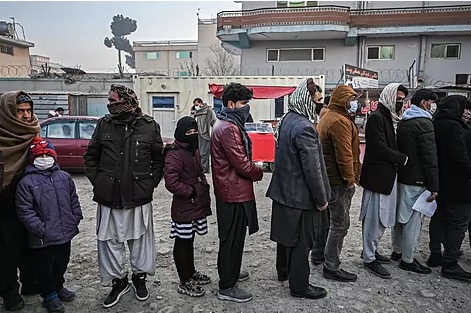
The security forces of the Taliban government have killed a man bomb this past Thursday at noon -local time-. According to the tale of the Taliban, a suicide bomber, loaded with a belt of explosives, approached the long line that, since last weekend, hundreds of Afghans have been carrying out in front of the Kabul passport issuing office. Although the attack was supposedly aborted, the number of victims that the attack could have caused is unknown.

Tuesday, December 21, 2021

Taliban Rule: Almost Half Of The Afghan Media Has Ceased Operations

Much of the media has been closed after the Taliban came to power. Most of the women in the industry have lost their jobs.

Since the Taliban came to power, 43 percent of the media in Afghanistan has been shut down. This is the result of a study by the non-governmental organization Reporters Without Borders and the organization of independent journalists in Afghanistan Ajia.

Monday, December 20, 2021

Afghanistan? That Is Now The Afghans' Problem!

The Taliban have been in power for four months. They plunged Afghanistan into several catastrophes, but the West is no longer paying close attention. That will take revenge.

Since the Taliban took Kabul on August 15, 2021 and thus became rulers of Afghanistan, they have promised the world to respect human rights, to give women space in society, to include minorities, to allow cultural activities, to guarantee freedom of the press and for peace within themselves Country to worry.

They say this because they want to reassure the world community. After all, as the rulers of Afghanistan, you are dependent on international financial aid. But there are people in Europe and America who believe the Taliban that they have moderated themselves over the past 20 years and will do better now.

Wednesday, December 15, 2021

Taliban: More Than 100 Ex-Local Workers Killed In Afghanistan, According To UN Information

The Taliban have been back in power in Afghanistan since the summer. Many acts of violence are not documented. The UN paints a drastic picture of the situation.

In Afghanistan, more than 100 former security forces have been killed since the Taliban came to power in August. This emerges from a new report by the United Nations (UN). In most cases, the acts were perpetrated by the radical Islamic group, said the High Commissioner for Human Rights, Nada Al-Nashif.

Tuesday, December 14, 2021

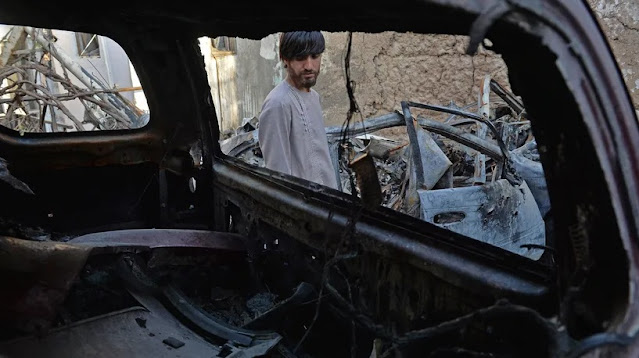
Afghanistan: US Army Relieves Soldiers After Drone Attack On Children

At the end of August, a US drone killed ten civilians, seven of them children, in Kabul. The military speaks of a tragic mistake. Those responsible go unpunished.

A US drone attack that killed ten civilians in the Afghan capital Kabul at the end of August has no legal consequences for the soldiers responsible. According to his spokesman, the US Secretary of Defense Lloyd Austin approved a report by the army command on the attack, in which no disciplinary measures are recommended against the soldiers responsible.

What we saw was a breakdown in process, execution and procedures 

spokesman John Kirby told journalists. 

It was not the result of negligence, it was not the result of misconduct, it was not the result of poor leadership 


Saturday, December 4, 2021

Taliban Supreme Leader Hebatullah Akhunzada Is Alive Or Dead?

Hezbollah Akhunzada, the supreme leader of the Taliban, is still speculated on whether he is alive or dead. However, they have not yet appeared.

According to the French news agency AFP, various suspicions are being expressed about the life or death of Hebatullah Akhonzada, the supreme leader of the Taliban. However, the mystery surrounding his resurrection has deepened since he did not come to light. It is still unclear who is leading the Taliban.