As Trump extends the fragile ceasefire on Day 54, we break down Pakistan's surprising role in the Iran-US conflict. Is it mediating or just messaging? And who's really calling the shots in Islamabad?
Iran 2026: On Day 54, a Fragile Ceasefire Holds. But All Eyes Are on Pakistan.
We’re on day 54.
For fifty-four days, the world has been holding its breath, watching a conflict that many feared would spiral out of control. The 2026 Iran-US confrontation, a tinderbox of geopolitical tensions, has been paused for now. And in a move that has analysts scrambling, President Donald Trump, back in the Oval Office, has just extended the ceasefire another 72 hours.
But here’s the twist that no one saw coming: the key player keeping this fragile peace from splintering isn’t in Geneva, Moscow, or Beijing. It’s in Islamabad.
Pakistan, a nuclear‑armed nation that doesn’t recognize Israel, is hosting Iran peace talks. Learn how US‑Pakistan crypto, mineral and security deals paved the way.
Why This Story Matters Right Now?
If you scan the newsfeed today, you’ll see a lot of chatter about the endless tug‑of‑war between Iran and the United States. What many people don’t expect is that Pakistan – a nuclear‑armed state that officially does not recognize Israel – has stepped up as a host for peace talks aimed at ending the Iran conflict.
Why is this noteworthy?
Strategic pivot: Pakistan has traditionally been seen as a regional player focused on its own security challenges (Kashmir, Afghanistan, internal terrorism). Taking on a diplomatic mantle in the Persian Gulf signals a broader, more ambitious foreign‑policy vision.
Potential ripple effects: If these talks bear fruit, they could reshape the balance of power in the Middle East, affect global energy markets, and even open new doors for trade between Pakistan and the West.
Let’s break down how we got here, what’s at stake, and why you should keep an eye on this unfolding drama.
Israel's government warns of an increase in global terror if the nuclear deal with Iran is reactivated. This is a "bad deal" for the West.
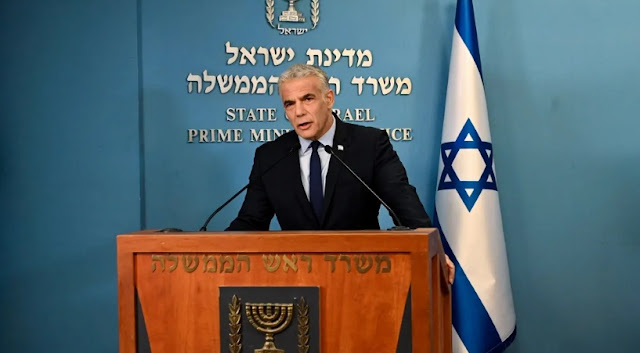
Israeli Prime Minister Jair Lapid has called on the West to end talks with Iran about reviving the nuclear deal. The negotiations must be stopped immediately, the agreement is "a bad deal," said Lapid in Jerusalem. Sanctions relaxation would add billions of dollars to Iran's treasury and allow it to fund terrorist groups like the Palestinian Hamas.
Recently there had been movement in the Vienna negotiations on reactivation of the international nuclear agreement with Iran. US officials said Iran had relaxed its blockade of some UN nuclear inspections and was no longer insisting that the US government remove the Revolutionary Guards from its terrorist list. According to EU foreign policy chief Josep Borrell, the talks could continue this week.
In the nuclear dispute that has lasted for years, a solution is apparently within reach. Now it is Iran's turn to avert a serious nuclear crisis, say Germany and France.
In the long-standing dispute over Iran's nuclear program, according to German Chancellor Olaf Scholz, a solution is within reach. "All the elements for concluding the negotiations are on the table," Scholz said at the Munich Security Conference.
The Iranian leadership now has a choice - the "moment of truth" has come. A breakthrough could soon be achieved in the negotiations, or they could still fail, emphasized Scholz.
The military modernization of China is causing uncertainty in Washington. Is a new nuclear race looming, this time between the USA and China?
The fear of a nuclear arms race is back. Once again, an escalation logic seems to prevail, which the first time could only be contained with politico-military restrationality - and with a lot of luck.
Back then, during the Cold War, it was the USA and the Soviet Union that kept filling their arsenals with new nuclear weapons. A credible deterrent, argued the strategists on both sides of the Iron Curtain, presupposes the ability to destroy one another. The claims to power of East and West clashed in the North Atlantic area and created a precarious balance of horror there.
Talks on resuming the nuclear deal are due to start on November 29th. Representatives from the EU, Iran and the USA take part.
Negotiations on the resumption of the nuclear deal with Iran are to be continued on November 29 in Vienna. The European External Action Service announced. Iran's deputy foreign minister and future head of the Iranian nuclear delegation, Ali Bagheri, has also confirmed the date on Twitter. The EU Foreign Affairs Representative Josep Borrell will chair the talks, and senior diplomats from China, Russia, France, Great Britain and Germany as well as other representatives of the Iranian government will also take part.
In 2015, the international community reached an agreement with Iran, then Donald Trump terminated it. Now Tehran wants to negotiate a resumption of the deal.
The Iran wants negotiations to resume its nuclear program next month. Iran's Deputy Foreign Minister Ali Bagheri announced this on Twitter. The negotiations with the EU's Deputy Foreign Representative, Enrique Mora, were very constructive. Bagheri wrote that it was agreed to resume nuclear negotiations by the end of November. He is the future head of the Iranian nuclear delegation in Vienna. He plans to announce the exact date next week.
The government from Tehran wanted to hold consultations on the "remaining differences" before the official resumption of the nuclear negotiations in order to enable "result-oriented negotiations". Therefore, Bagheri met Mora in Brussels. Both diplomats last met for talks in Tehran in mid-October.
Negotiations to restore the 2015 Vienna Agreement originally began in April, but were then interrupted by the Iranian presidential election in June and the change of government in Tehran. China, Germany, France, Great Britain and Russia are trying to get the US to agree to the agreement again. Iran should also enter into technical obligations.
The 2015 Vienna deal was intended to prevent Iranian nuclear weapons from being built. In return, the international community undertook to lift the sanctions against Iran. The then US President Donald Trump terminated the agreement in 2018 and again imposed economic sanctions on Iran. You are partly responsible for the worst economic crisis in the country to date.
In response to US sanctions, Iran began exceeding the technical restrictions placed on it in the agreement in 2019. Among other things, the country increased the uranium enrichment in its facilities from the permitted 3.67 to 60 percent weapons-grade uranium.
Specific military training returns to face the "existential threat" that Tehran possesses unconventional weapons.
The noise of more than 70 fighter jets from eight countries in the largest international exercise in Israel's history contrasts with the official silence on the possible return of the Israeli military option to thwart the Iranian nuclear plan. After four years, the Air Force has decided to return to specific training to be ready if the order to act in the so-called "third circle" arrives.
"This air maneuver, prepared for a year, is not focused on Iran or has to do with specific challenges," an Israeli high command clarifies to EL MUNDO at the southern Ovda air base a few days after the fifth edition of Blue Fag . Eight Armies, under the observation of another eight, rehearse flight scenarios for air-to-air and surface-to-air missiles, coordinate the action of aircraft of different types and generations, and complete the mutual learning of pilots with different contexts and modes of action. Of all of them, the Israeli pilots know that, if the diplomatic channel of the powers before Tehran fails, they will be the ones who will receive the slogan of the mission against the nuclear power plants in Iran.
Israel has resumed military exercises to attack Iran's nuclear facilities.
According to Israeli media, the country's air force has launched a major military exercise two years later, aimed at preparing to target Iran's nuclear facilities. The head of the Israeli army, Afif Kokhafi, has allocated a large budget for the exercise.
The Israeli army chief had earlier ordered his air force to be prepared to target Iran's nuclear plants, stressing the need for high-level training exercises to enhance skills.
The US wants to return to the nuclear deal under Joe Biden, but success is uncertain. In the event of failure, like Israel, they do not rule out any options.
In the nuclear dispute with Iran, the US and Israel have again threatened consequences if a diplomatic solution to end the Iranian nuclear program cannot be found. Both states fear the construction of an Iranian atomic bomb. "We know that there are moments when nations have to use force to protect the world from evil," said Israeli Foreign Minister Jair Lapid at a meeting with his counterparts from the US and the United Arab Emirates in Washington.
The beginning of the end of the story between Donald Trump and his Supreme General Mark Milley begins on June 1, 2020. A few days earlier, the black George Floyd was killed by the white policeman Derek Chauvin in Minneapolis. Protests broke out across the country, including on a street by the White House that was to become Black Lives Matter Plaza. The then President Trump cleared the way and ran from the White House across Lafayette Square in front of St. John's Churchto hold a Bible up to the cameras. He was accompanied by an entourage that also included Mark Milley. In combat uniform. An appearance that was widely criticized because it gave the impression that the US military leadership was justifying the crackdown on demonstrators by the police. Milley finally apologized, and the chief of staff stabbed his president in the back.
"I shouldn't have been there," Milley said later in a video address. "My presence at this moment and in these surroundings gave the impression that the military was involved in domestic politics." Milley also contradicted the president in the weeks that followed when he publicly opposed sending federal troops to cities in the country to crack down on protesters.
Milley is said to have thought of resigning, but then rejected it. And Trump also stuck to his top military advisor - whom he is now accusing of high treason.
China has admitted that four of its soldiers were killed during a clash with India in the Gulwan Valley. According to a statement issued by the Chinese state media, China has awarded high honors to four soldiers who sacrificed their lives during the clashes with the Indian Army. The dead included Chinese Hong Jin, Chen Zhangrong, Xiao Xuan and Wang Zhuoran. In a tweet on the social networking site, China's state-run newspaper said that Colonel Qi Fabao, who commanded the troops during a clash with Indian troops in June last year, had been seriously injured and had been awarded military honors. It is pertinent to mention that a clash took place between Indian and Chinese troops on the Gulwan Valley in Ladakh last year in which 20 Indian soldiers were killed. No statement was made by China regarding the deaths of its troops, while the two countries recently agreed on a five-point agenda to withdraw troops from the disputed border area and ease border tensions. Earlier, the Indian military claimed to have captured a Chinese soldier in Ladakh.
Israel's Mossad intelligence agency was involved in the assassination of Iranian nuclear scientist Mohsen Fakhrizada in November last year. The Jewish Chronicle reports that Mossad agents killed Mohsin Fakhrizada with a one-gun smuggled in various pieces. The report quoted intelligence sources as saying that about 20 Mossad agents, including Israelis and Iranians, attacked and killed the Iranian nuclear scientist after about eight months of surveillance. Al Jazeera says the report, published in a London newspaper on Wednesday, could not be immediately confirmed. On Monday, however, Iran's intelligence minister told state television that an employee of Iran's armed forces was involved in the killings. According to Iranian media, Fakhrizada died in hospital on November 27 after the attack. Shortly after the attack, Iran blamed Israel. An Israeli government spokesman said on Wednesday that he had not commented on the report.
As per the International Atomic Energy Agency IAEA, Iran's loads of advanced uranium are higher than permitted. The sum surpasses the cutoff by multiple times.
As indicated by the International Atomic Energy Agency (IAEA), Iranian loads of enhanced uranium are ordinarily higher than allowed. A report by the IAEA said that Iran has kept on advancing uranium since the United States pulled out from the global atomic concurrence with Tehran . Meanwhile, the measure of marginally advanced uranium has surpassed as far as possible by in excess of multiple times.
Iran has not yet given the IAEA an adequate clarification for the revelation of uranium particles in an office that has not been proclaimed an atomic site. The nation additionally keeps on enhancing uranium. That originates from the quarterly report of the IAEA.
How much damage could a boycott of French products do to the French economy?
A boycott of French products by Muslim countries could directly cost the French economy up to ً 46 billion. French President Emmanuel Macron's anti-Islamic rhetoric and his refusal to stop blasphemy against the Prophet Muhammad have sparked a campaign to boycott French products in several countries. The boycott of French goods was first announced by the Turkish president, after which French products have been removed from stores in many countries, including Kuwait, Jordan and Qatar. France's total trade with Muslim-majority countries is over 100 100 billion, of which France's exports are .8 45.8 billion.
The missile crisis in Cuba was one of the main threats to world peace after World War II
"Good afternoon, fellow citizens, this government, as promised, has maintained a strict watch over the operations of the Soviet Army on the island of Cuba, " with these words US President John Fitzgerald Kennedy was beginning a speech called will not change the course of history.
On Oct 22nd is the 55th anniversary of that crucial speech, which was broadcast both on radio and on a television still in black and white, and that paralyzed a nation that listened attentively to each of its 2,434 words, eleven of which coincided : "nuclear".
Some words that would change the world, even if in fact they were uttered precisely to the contrary, so that it would not change, to avoid a possible nuclear holocaust that would have made, the president said, "the fruit of any victory in ashes in our mouths"
At this point, the stage is well known by all. On October 14, 1962, photographs taken by U2 planes from the US intelligence service revealed the presence of eight shuttles and 16 medium-range missiles in the western region of the island.
"It was clear that these strategic weapons, which were reliable and modern, were destined to be managed by the Soviet Union and not to be transferred to Cuba," the Central Intelligence Agency (CIA) said in an unclassified report.
This information gave way to thirteen days of tension in which any error of calculation could have given rise to a conflict of consequences difficult to imagine.
Fundamental attitude
"The president's attitude was critical to defusing the crisis," Kennedy said. "It was the intention of President Kennedy to avoid any nuclear exchange, whether voluntary or accidental," said Defense Department Chief Erin Mahan.
One of the key measures taken by the leader was the creation of a working group of trusted advisers, most of whom belonged to the National Security Council.
It was this group of experts who called for deaf ears of those responsible for the General Staff, who were betting on an air attack on Cuba, and for opening a negotiation with the Kremlin through non-traditional channels, while blocking the island to avoid the arrival of new weapons.
This decision would be doubly successful, not only because in the end proved to be the correct way to settle the crisis, but also because the air attack would have followed the subsequent landing of US troops on the island and that would have been a serious action failure.
Despite numerous reports by the intelligence services, what US intelligence was unaware of at the time was that Russian troops deployed in Cuba were also equipped with nuclear weapons, which "could have ended" with the troops, Mahan said.
"Through initiatives by unofficial channels, the United States agreed not to invade Cuba and withdraw its missiles from Turkey." (Soviet Nikita) Khrushchev pledged to dismantle and remove Soviet missiles and light bombers from Cuba, "he said. the historian of the Pentagon.
The other key measure of this crisis also had the words as the protagonist and was none other than the historic presidential address. Since in informing the American people, with open hearts, Kennedy was legitimated to act with total freedom knowing that his honesty had gained the support of the whole country.
"The road we have chosen at the moment is full of dangers, like all roads, but it is the most coherent with our character and our value as a nation ... And a road we will never choose is the road to surrender and submission, "Kennedy concluded in his address.
And, in fact, that was the key. Find a way in which there were no losers, but no winners . Possibly the only way he could stop someone from ending that nasty ash taste in his mouth.
Nine countries in the world have about 15,000 nuclear weapons, a figure that shows that expressions of world leaders for nuclear disarmament do not mean a binding letter of intent, as recorded by the International Campaign to Abolish Nuclear Weapons (ICAN ), who was awarded the Nobel Peace Prize on Friday, 6 October. ICAN has received the award for its work to draw attention to the catastrophic humanitarian consequences of the use of atomic weapons as part of the escalating tension over North Korean threats and increased nuclear capacity around the world. The United States and Russia accumulate a total of 13,800 nuclear weapons, of which 1,800 are likely to be used in a matter of minutes if necessary. The United States, France, China, India, Pakistan, Israel and North Korea add atomic equipment, according to the anti-nuclear initiative based on the official data presented by the Federation of Scientists of the United States in 2017.
Countries with nuclear weapons
The race for nuclear development was started by the United States, which is also the only country that has used this type of artifacts in a conflict and spends more budget than the rest of the countries combined in its nuclear program. Its 6,800 weapons place him, however, behind the 7,000 of Russia, the nation with the largest arsenal in the world. At a great distance, France and the United Kingdom maintain about 250 nuclear equipment with which they have mainly equipped several submarines, in contrast to China that has the capacity to transport a similar number of weapons by land, sea and air. Both India and Pakistan have developed their nuclear program in recent years, but their rapidity has enabled them to acquire substantial infrastructures and more than a hundred weapons. For its part, the Israeli authorities are ambiguous regarding its atomic arsenal, without denying or accepting its existence, although experts estimate that it has around 80 teams. North Korea is the country on the list with less nuclear equipment, not exceeding ten weapons. However, its missile tests and its threats to use an ever-growing weapons program have raised concern for the international community in the face of fears of a possible atomic war.
Countries indirectly related to the nuclear program
ICAN points out that five European countries have a US nuclear arsenal in their territory - Belgium, Germany, Italy, Turkey and the Netherlands - as a result of agreements signed within the framework of NATO. In addition, dozens of countries have nuclear alliances with those powers that have their own weapons. Faced with the growing threat of nuclear war, more than 20 countries see the possession of nuclear weapons by the United States as a guarantee of security for them. There are also many nations that have a nuclear industry or research reactors capable of manufacturing such equipment, in a race that has been activated in urban areas "it would kill millions of people and have effects for decades," according to the organization laureate The Nobel Committee stressed in its speech Friday that "the next step to have a world free of nuclear weapons must involve the countries that have them." "That's why this year's Nobel Prize is also a call on these countries to start negotiations seriously with the prospect of a careful, gradual, balanced and supervised elimination of the nearly 15,000 nuclear weapons in the world."
The new sanctions directed against eleven companies and institutions as well as against four individuals with ties to Tehran's nuclear program, told the Foreign Office and the Treasury Department in Washington. Were subject to sanctions in accordance with these terms are also a number of front companies in Hong Kong and Malaysia, among others, as well as several Iranian government agencies. They are for U.S. assessment used to circumvent the existing sanctions. The penalties are intended to pull the companies, institutions and individuals, the money supply. Thus, U.S. citizens may not deal with those affected. Any assets in the United States are frozen. The West suspects Iran to advance under cover of civilian nuclear research, the development of nuclear weapons. Tehran denies this Israel feels threatened by Iran's nuclear program and the leadership in Tehran directly and indirectly, has repeatedly threatened military strikes against Iranian nuclear facilities. International negotiators and representatives of Iran have searched in several rounds of talks for a peaceful solution, but is not, however, made decisive progress. The West demands that Tehran stopped enriching uranium to 20 percent and allows more extensive controls to concerns. Iran insists on the right to a civilian nuclear program, which includes the enrichment of uranium. In addition, calls Tehran that the West lift its sanctions, mainly relating to the oil trade and the banking sector. Tehran also tries to downplay the impact of sanctions in their own country while preventing critical reports. "We can not now allow the media to publish news and analysis that are not in line with national interests," said Minister of Culture Mohamed Hosseini. Officially it is called, oil sanctions could even help the country to become independent from oil revenues. The export of oil supplies more than 70 percent of Iran's income. With the recent EU sanctions, Iran has lost at least 20 percent of its revenue. If other countries follow the embargo, or such as China and India buy more cheaply, even the loss would rise to 50 percent.
Israel's army chief Benny Gantz does not expect to build a nuclear bomb in Iran. The decision would make the regime in Tehran has yet said the lieutenant general. He believed in the rationality of the Iranian leadership, however, Israel must keep open to all options. There are unusual words from Israel : The Israeli army chief of staff, Benny Gantz, the construction of an Iranian nuclear bomb considers unlikely. In an interview with the daily newspaper "Haaretz", he said: "Iran is gradually approaching the point where it can make a decision whether it wants to build a nuclear bomb." So far, the revolutionary leader of the country have Ayatollah Ali Khamenei , but not yet decided whether he would go that extra step. Gantz doubt that Khamenei will follow this path. "I think the Iranian leadership is very rational, thinking person," said the lieutenant general. "I do not think Iran will decide on the development of nuclear weapons." He was confident that the diplomatic and economic sanctions against Tehran bear fruit . At the same time, however, Israel was "military options" against Iran as a "last chance" before. "That's my job as a military man," said Gantz. "A nuclear Iran would be bad for the world and the region, because Iran would open new possibilities for action," warned the man who stands for 14 months at the head of the Israeli military. A nuclear bomb Tehran might as leverage in favor of them related and anti-Israeli militant organization Hezbollah in southern Lebanon and Islamic Jihad use in Gaza, warned Gantz. In addition, it may Israel's existence by a nuclear-armed Iran threatened .




 Posts
Posts


