Translate

Search This Blog

Showing posts with label Army. Show all posts

Saturday, May 9, 2026

U.S.-Iran War 2026: Military Dictatorship Iran — The Real Regime Change Has Already Taken Place (Just Not How Israel and USA Planned)

An in-depth analysis of how Iran's transformation into a military dictatorship represents an unexpected outcome of Western policy, reshaping Middle East geopolitics and nuclear dynamics.


When Plans Go Sideways: What Really Happened in Tehran


Sometimes history doesn't unfold the way anyone expects. For years, Western intelligence communities, Israeli strategists, and Washington policymakers huddled over classified briefings, mapping out scenarios for what they called "regime change" in Iran. They imagined popular uprisings weakening the clerical establishment. They plotted cyber operations that would bring the Revolutionary Guards to their knees. They rehearsed the moment when theAyatollah's grip on power would finally slip.


Fast forward to 2026, and something remarkable and deeply ironic has happened. The regime in Tehran has indeed transformed. The clerical hierarchy that defined Iranian politics for four and a half decades has been replaced. But the new order isn't a Jeffersonian democracy rising from the ashes of theocracy. It isn't a Western-aligned government ready to integrate into the global financial system. Instead, what has emerged is something far more unsettling: a militarized authoritarian state that makes the previous regime look almost moderate by comparison.


The regime change Israel and America spent decades pursuing has occurred just not by their hands, and certainly not toward their goals. The Revolutionary Guards didn't fall; they consolidated. The military didn't become subordinate to civilian control; civilians found themselves subservient to generals. And the result is a Iran that is more dangerous, more unpredictable, and more volatile than anyone anticipated.

Wednesday, May 6, 2026

Shadow Supply Lines & Trump's "Pause": How Chinese Components Keep Flowing to Iran and Russia's Drone War Machines Despite US Sanctions

There's something fundamentally broken in the international system when sanctions are supposed to stop war-making machines, but the parts keep showing up anyway. 


According to recent Wall Street Journal reporting, Chinese companies are continuing to supply key components to drone factories in Iran and Russia day after day, shipment after shipment while Washington rolls out new penalties and expresses grave concern. The question isn't whether these shipments exist. The question is why they can't be stopped.


The answer, like most things in global trade, is complicated, frustrating, and ultimately reveals how sophisticated supply chains have become at defeating the very tools designed to control them.


What's Actually Getting Through


The components reaching Iranian and Russian drone factories reads like a shopping list of modern technology's most versatile building blocks. We're not talking about specialized military hardware that requires exotic manufacturing processes. We're talking about the same components that power smartphones, laptops, electric vehicles, and countless civilian applications.

Tuesday, May 5, 2026

Military Operation or "An Excursion"? Trump's War Dilemma and the Iran Conflict No One Seems Able to End

Trump promised to end America's wars but finds himself embroiled in the Iran conflict. Read our analysis of the administration's struggling approach and the geopolitical implications.


There's something almost tragic about watching a president march into a war he promised to avoid. Donald Trump rode into office on a Simple Promise: end America's endless conflicts, bring the troops home, and stop dragging the United States into foreign quagmires. 


Yet here we are in 2026, and the drums of war with Iran are beating louder than ever. What's stranger still is how the administration itself seems unsure whether it's watching the beginning of a military campaign or just another dramatic episode in an ongoing saga that's somehow lost its plot entirely.


The language coming from the White House has become almost comical in its contradictions. One day, officials speak of precision strikes and limited operations. The next, they're scrambling to explain why those "limited" actions somehow led to a broader regional conflict that now threatens to draw in multiple Gulf nations, strain American military resources to the breaking point, and pump oil prices so high that drivers in Ohio and Nebraska are questioning whether any of this was supposed to make their lives better.

Monday, May 4, 2026

Trump's "Project Freedom" Could Trigger Full-Scale War... Today!

The Strait of Hormuz has always been one of the world's most dangerous flashpoints. But today, something feels different. The tension isn't theoretical anymore—it's standing right on the edge of a razor.


Donald Trump has launched what his administration is calling "Project Freedom," a deliberate, U.S.-led operation to push merchant vessels through the Strait of Hormuz regardless of Iranian interference. It's a direct, unmistakable challenge to Iran's control of this strategic waterway, which handles roughly 20% of the world's oil supply. No diplomatic dance. No subtle messaging. Just ships moving through contested waters with American backing.


And here's the thing that has everyone holding their breath: Iran now faces a choice that could define the next decade of Middle East geopolitics—or spark a war nobody truly wants but nobody can seem to stop.

Sunday, May 3, 2026

Another Day, Another Threat: Trump's Standoff with Iran and What It Means for the Middle East

The tension between the United States and Iran has reached another boiling point, and honestly, it feels like we're watching the same movie play out on repeat. 

President Donald Trump just made it clear that he's not impressed with Iran's latest proposal, and given the aggressive posture he's taking, the Middle East could be staring down the barrel of yet another major conflict. If you've been following this story, you already know the stakes are incredibly high. If you're just catching up, let me break down what's happening and why it matters so much right now.


Trump's Brutal Assessment and the Path Forward


President Trump didn't hold back when discussing Iran's recent proposal. He stated plainly that he'll be reviewing the plan, but he genuinely cannot imagine accepting it as it stands. The core of his frustration? Iran hasn't paid what he considers a "big enough price" for what they've done to humanity and the world over the past 47 years. Those are strong words, and they signal that the administration is in no mood for compromise at this particular moment.

Friday, May 1, 2026

The Clock is Ticking: Why the Next 72 Hours Between the US and Iran Are Anything But Normal

Reports indicate the US is preparing a strike on Iran. We break down the escalating tensions, the high-stakes briefing, and what it could mean for global stability. Read the latest analysis.


Let’s be real: the news cycle moves so fast that most headlines blur together. But every once in a while, you see a series of reports that makes you stop scrolling. The kind that carries a weight you can feel.


This is one of those moments.


Right now, the world is watching a terrifyingly familiar script potentially play out between the United States and Iran. The language is still couched in “reports” and “maybes,” but the pieces on the chessboard are moving in a way that suggests something far more serious than routine saber-rattling.


Here’s what we know, and why it has experts so concerned.

Thursday, April 30, 2026

Trump Iran Strategy 2026 | The Brink of Escalation: Trump’s High-Stakes Chess Match with Iran

As we sit here on April 30th, 2026, the air feels heavy with the kind of geopolitical tension we haven’t seen in years. If you’ve been following the headlines today, you know the whispers coming out of Washington are turning into loud conversations. Donald Trump is reportedly deep in high-level briefings with U.S. Central Command (CENTCOM), and the topic isn't just "diplomacy"—it’s the logistics of potential military action against Iran.


Let’s pull back the curtain on what's actually happening in those rooms. We aren't just talking about a single move on a game board; we’re looking at a complete overhaul of how the U.S. intends to handle Tehran.


It’s Not "Either-Or" Anymore


For a long time, the debate was always: Do we use economic sanctions, or do we use the military?


According to current reports, that "either-or" mentality is dead. The strategy being weighed right now is a hybrid of economic and military warfare. The U.S. blockade is already doing the heavy lifting, squeezing the gears of Iran’s economy until they grind. But the briefings Trump is receiving suggest that pressure alone might not be the finish line.


The administration is looking at a "pressure-first" model that transitions into surgical military intervention if the needle doesn't move. It’s a pincer movement: choke the resources, then strike the capabilities.

Sunday, April 5, 2026

US-Israeli Attacks on Iran | Clash of Narratives: U.S. Hails Daring Rescue, Iran Claims Shoot-downs and Captures — What Really Happened?

The U.S. claims a historic military rescue mission, but Iran says American pilots were captured. Unpack the conflicting narratives, military capabilities, and global implications in this in-depth analysis of the latest Iran-U.S. standoff.

There’s a story unfolding right now that feels like it was ripped straight from a high-stakes military thriller. One side calls it a heroic, near-impossible rescue pulled off with precision. The other? They’re painting it as a devastating defeat, claiming captured pilots and downed jets. Welcome to one of the most confusing, charged moments in recent U.S.-Iran tensions and the world is scrambling to figure out what actually went down. It’s a classic case of “he-said, she-said,” but the stakes couldn’t be higher. We’re talking about military lives, high-tech hardware, and a rescue mission that depending on who you believe was either a miracle or a catastrophe.

Here is the breakdown of what’s actually happening right now.

The View from Washington: A "Daring" Success

President Donald Trump made headlines by declaring that the U.S. military had executed 

one of the most daring search and rescue operations in American history

According to the White House, the mission was a surgical success, aimed at recovering missing pilots. The tone from the US side is one of triumph. They’re painting a picture of elite forces moving in under the radar, getting their people, and getting out. It’s the kind of story that boosts national morale and reinforces the image of US military precision. Trump described the operation as a testament to American bravery, signaling that the pilots are safe and the mission is officially a "win."

The View from Tehran: A "Massive" Failure

But if you flip the channel to Iranian state media or look at the statements coming out of the Islamic Revolutionary Guard Corps (IRGC), you get a story that is almost unrecognizable.

Iran isn't just saying the mission failed; they’re claiming they decimated the US rescue fleet. In a series of bold statements, the IRGC claims they downed a staggering list of American aircraft, including:

  • Apache Helicopters
  • The A-10 Warthog
  • F-35 Lightning II
  • F-15 Eagles

More than that, Iran claims they’ve captured all the pilots involved in the rescue attempt. They are calling the US report a total fabrication and "fake news," aimed at covering up a tactical nightmare.

Saturday, April 4, 2026

Day 36: Iran Claims It Downed Two US Warplanes; Search for Missing Crew Member Underway, US-Israeli Attacks on Iran – Full Damage & Casualty Updates

The US-Israeli campaign against Iran enters its 36th day with a major escalation. Get the latest on Iran's claim of downing two US warplanes, casualties, damages, and what it means for global security. Updated live.

For 36 days, the world has watched a conflict that has rewritten the rules of modern warfare. What began with targeted airstrikes has escalated into a grinding, high-stakes war of attrition between a US-Israeli coalition and the Islamic Republic of Iran.

Tonight, the conflict has taken its most dangerous turn yet.

Sunday, April 10, 2022

Pakistani Three Bad Boys, Army, Supreme Court & Opposition: PM Imran Khan Ousted By So Called No-Confidence Vote, United States Overthrow Him

A majority of MPs voted in favor of a motion to overthrow the prime minister. Opposition leader Shehbaz Sharif could become his successor.

Pakistan's parliament has ousted Prime Minister Imran Khan with a vote of no confidence. 174 out of 342 deputies voted against Khan, as the speaker of the parliament, Sardar Ayaz Sadiq, announced in the capital, Islamabad. Khan is the first prime minister in  Pakistan's history to be ousted by a no-confidence vote.

It is still unclear when a new head of government will be elected. The head of the opposition Muslim conservative party PML-N, Shehbaz Sharif, is considered the favorite for the post. He thanked the supporters for their fight after the vote of no confidence: "Pakistan will rebuild this unity," said Sharif.

Sunday, April 3, 2022

Pakistan: President Arif Alvi Dissolves Parliament

Pakistan's prime minister, Imran Khan, who is under pressure, is asking the head of state to create the conditions for new elections. He had previously escaped a no-confidence vote.

Pakistani President Arif Alvi has dissolved parliament, thereby creating the conditions for early elections. These must now take place within 90 days. A few hours earlier, Prime Minister Imran Khan had managed to avoid being removed from office by a vote of no confidence that was considered certain.

The Vice President of Parliament and Khan ally Qasim Suri had rejected the planned vote on a no-confidence motion by the opposition as unconstitutional. Khan himself then said on television that he had asked the President to dissolve Parliament. The population should be prepared for new elections.

Monday, January 31, 2022

UAE Claims To Have Thwarted Ballistic Missile Attack By Houthi Rebels During Israeli President's Visit

The United Arab Emirates says it has defused and destroyed a ballistic missile fired by Houthi rebels in Yemen.

The UAE Ministry of Defense claimed from its Twitter account that a ballistic missile fired from the Yemeni province of Al-Jawaf on Sunday night was intercepted by its defense system in the air at 00:20 (local time). Local time) destroyed. The UAE has also released a video of the successful missile destruction.

According to the Ministry of Defense, there were no casualties in the Houthi attack and the remnants of the missile fell out of populated areas.

Saturday, January 29, 2022

Ukraine Conflict: Joe Biden Wants To Send More US Troops To Eastern Europe

The US President wants to move troops in the short term, but it is about "not too many" soldiers. Boris Johnson and his Foreign Secretary are planning a trip to the region.

In view of the Ukraine conflict, the US President wants to increase the military presence in Eastern Europe. "I will be relocating soldiers to Eastern Europe and the NATO countries at short notice," said Joe Biden. However, only a small number of soldiers will be deployed. US Secretary of Defense Lloyd Austin and Chief of Staff Mark Milley had previously called for de-escalation to prevent a "appalling" war.

At first, Biden did not specify how many soldiers he wanted to transfer to Eastern Europe. It's about "not too many" soldiers, he told journalists. Biden did not give any details at the time either.

Friday, January 28, 2022

Ukraine Conflict: Joe Biden Warns Of A Possible Russian Invasion In February

The US President speaks of the "strong possibility" of a Russian invasion. The number of soldiers on the Ukrainian border continues to increase.

US President Joe Biden has warned his Ukrainian counterpart Volodymyr Zelenskyy that Russia may be planning an invasion in February. Biden made it clear to Selenskyj in a phone call that there was a "strong possibility" of such an invasion, said National Security Council spokeswoman Emily Horne in the White House.

In the conversation, Biden again assured Selenskyj of his support in the event of a Russian invasion. According to the White House, he reiterated the US' readiness to "react decisively, together with its allies and partners, if Russia invades Ukraine further." The government in Washington is therefore examining "additional macroeconomic support to help the Ukrainian economy under the pressure of Russian military build-up".

Monday, January 24, 2022

Ukraine: USA Asks Relatives Of Diplomats To Leave The Country

Families of US diplomats to leave Ukraine. The US government justifies this with the risk of a Russian military operation. Advises against trips to Russia.

The US State Department has ordered the families of US diplomats in the Ukrainian capital of Kiev to leave the country. The reason for this is the "continued threat of a Russian military operation," the ministry said.

Local employees of the US embassy may therefore voluntarily leave the country. Other US citizens living in Ukraine should "now consider" leaving Ukraine by commercial flights or other means of transportation, it said.

Saturday, January 22, 2022

Yemen: Air Strike On Prison Kills More Than 100 | Videos & Pictures

The long-running conflict in Yemen has intensified, with an air strike on a prison killing more than 100 people and wounding three children in another bombing.

Foreign news agency 'AFP' Houthi rebels have released a gruesome video showing mutilated bodies buried in rubble after an attack on a prison, in which the prison building in the northern center of Saada completely collapsed Done.

More than 70 dead in IS attacks in Syria and Iraq

Islamic State fighters have attacked a Syrian prison where ISIS supporters are being held. Eleven soldiers were killed in a raid in Iraq.

The Islamist militia Islamic State (IS) has killed more than 70 people in attacks in Syria and Iraq. In north-eastern Syria, militants have attacked a prison in the city of Al-Hassaka where at least 3,500 suspected ISIS members are being held there.

More than 20 Kurdish security forces and nearly 40 IS members were killed, the Syrian Observatory for Human Rights said. Eleven soldiers were killed in a raid on a military base in eastern Iraq, local authorities said.

Wednesday, January 19, 2022

Ukraine conflict: US Concerned About Russian Troop Deployments To Belarus

The US government has announced that Russia has transferred soldiers to Ukraine's neighboring country. Complicity by the regime there in an attack is "unacceptable".

The US government has expressed concern that Russia transferred Russian soldiers to Belarus over the weekend. "The timing is remarkable and of course it raises concerns that Russia may intend to deploy troops in Belarus under the guise of joint maneuvers with a view to possibly attacking Ukraine from the north," said a senior US official.

The number of Russian soldiers is above the number that would be expected in a "normal military exercise". She stressed that Belarusian ruler Alexander Lukashenko's "complicity" in such an attack would be "completely unacceptable".

Tuesday, January 18, 2022

UAE: Drone Strike Must Be Punished

The UAE Foreign Ministry has condemned the drone strike by Houthi rebels in a statement and said "it will be punished." "The United Arab Emirates has the right to retaliate against this terrorist attack," the statement said, according to Reuters.

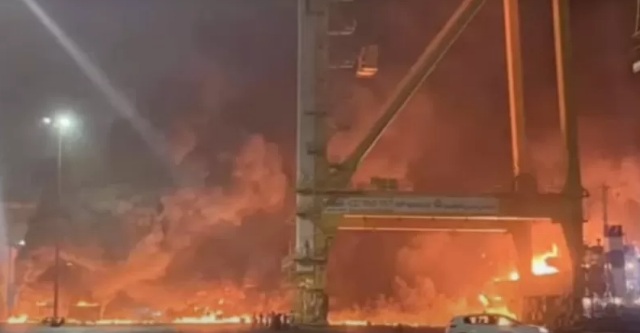
One Pakistani and two Indian nationals were killed in explosions in three oil tankers in the port area of ​​the United Arab Emirates on Monday, according to Abu Dhabi police.

According to the Emirati news agency WAM, Abu Dhabi police said after the attack that in addition to the casualties, six people were injured in the fire that broke out after the blast.

Saturday, January 15, 2022

Russia-Ukraine Conflict: US Accuses Russia Of Plotting Provocative Actions

A US official has said Russia is plotting "provocative actions" to find an excuse to invade Ukraine.

A Pentagon spokesman for Russia's Pentagon said in a statement that Russia was planning to launch a "False Flag" operation in Ukraine so that Moscow could accuse it of plotting to invade Ukraine, but Russia denied the allegations. The allegations come a week after talks between the United States and Russia eased tensions.

Ukraine on Friday accused Russia of backing cyberattacks on dozens of government websites.